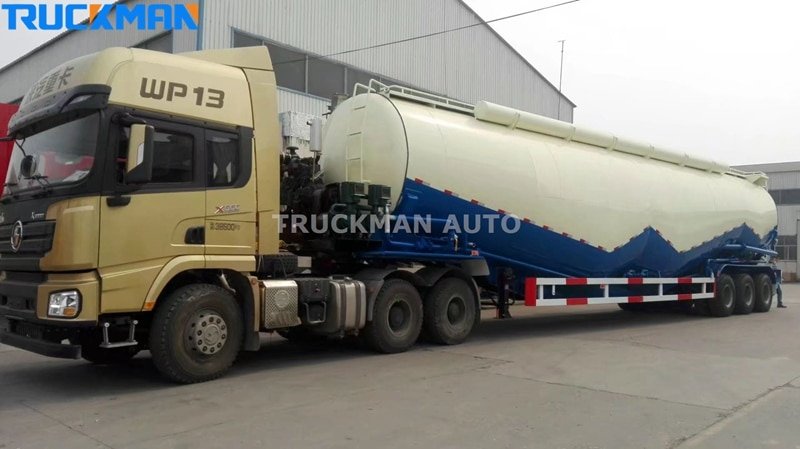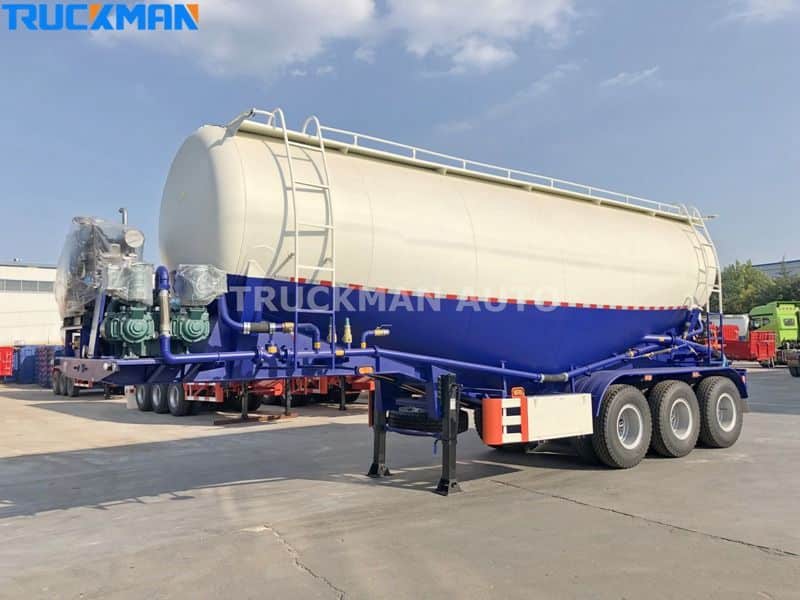
Dry bulk is one of the most traded commodity categories in global supply chains. It covers the unpackaged solid materials that supply energy, construction, food, and manufacturing industries worldwide. Understanding what qualifies as dry bulk—and how it differs from other cargo types—is the starting point for any shipping or transport planning decision.
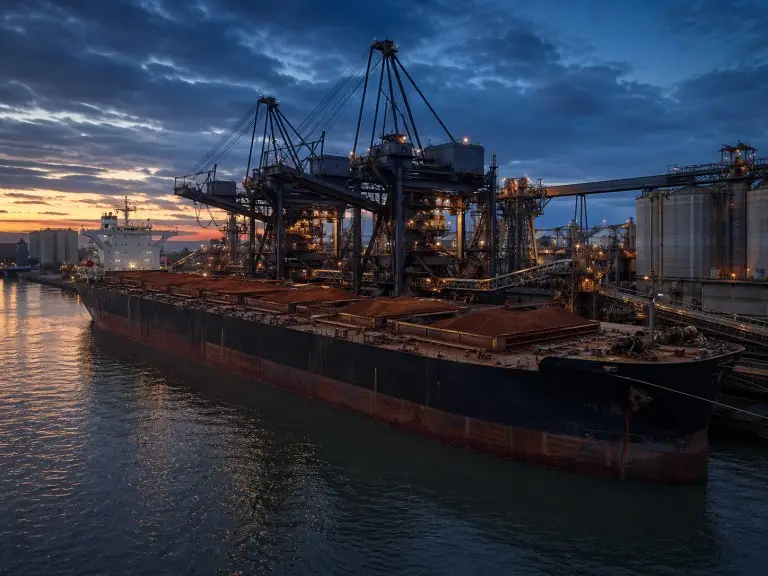
What Qualifies as Dry Bulk Cargo?
Dry bulk refers to solid, unpackaged commodities transported in loose form. Classification depends on three conditions: physical state (solid, not liquid or gas), the absence of unit packaging, and direct loading into a cargo hold without containerization. Volume and weight alone do not determine whether a material qualifies.
Dry bulk materials range from granular substances like grain and fertilizer to denser particulates such as iron ore and cement clinker. What they share is a homogenous composition across a single shipment and compatibility with bulk-handling systems—grab cranes, conveyor belts, gravity chutes, or pneumatic discharge equipment. The absence of packaging is not incidental. It is what makes bulk-handling economically practical at the scale these commodities require.
We clarify with buyers and logistics teams that packaging state, not cargo volume, determines classification. Five hundred metric tons of cement in sealed bags is break bulk, not dry bulk. That distinction affects terminal assignment, vessel type, and loading rate from origin to destination.
Dry Bulk vs. Wet Bulk vs. Break Bulk
Dry bulk, wet bulk, and break bulk are the three primary cargo categories in global shipping. Each is defined by a different physical state and containment method—not by shipment size or commodity value.
Wet bulk covers liquid commodities such as crude oil, edible oils, chemicals, and molasses. These move in sealed tank vessels or liquid tanker trailers. Break bulk refers to individually packaged or unitized cargo—sacks, drums, steel coils, timber—loaded piece by piece into general cargo ships. Neo-bulk is a further sub-category for non-containerized but individually counted items, such as vehicles and steel pipes.
When a commodity crosses these boundaries—say, cement clinker shipped loose versus bagged cement on pallets—vessel type, port terminal, and road equipment all change. We find that clarifying this boundary early in transport planning prevents the equipment mismatches that most commonly add unplanned cost to commodity logistics.
Types of Dry Bulk Commodities
Dry bulk commodities divide into major bulks and minor bulks. The distinction reflects trade volume, route structure, and how much specialized handling each category requires.
In UNCTAD shipping statistics, five commodities are commonly grouped as major bulks: iron ore, coal, grain, bauxite and alumina, and phosphate rock. Many commercial shipping glossaries—including Clarksons—use a narrower definition that identifies iron ore, coal, and grain as the three primary major trades, with bauxite and phosphate falling under minor bulks or other dry cargo categories. Both framings appear in active industry use. What matters for transport planning is that these high-volume commodities move on dedicated long-haul routes under long-term charter agreements, typically on Capesize or Panamax vessels.
Minor bulk commodities include cement, fertilizers such as urea and potash, sugar, salt, sand and gravel, forest products, and scrap metal. Each serves a specific industrial role: cement and aggregates in construction, fertilizers in agriculture, scrap in secondary steel production. Minor bulks move in smaller consignments across more varied routes, and vessel selection is more flexible—Handysize or Supramax vessels with onboard cranes are common, suited to ports with limited shore infrastructure.
We note that the major-minor classification shapes transport and equipment decisions directly. This article covers standard commercial dry bulk commodities. It does not extend to hazardous bulk chemicals governed by ADR road transport or IMDG maritime provisions, which require separate regulatory review.

Handling and Transport Requirements by Commodity
The table below shows how four operationally distinct dry bulk commodity groups differ across key transport variables. These differences drive equipment selection at every stage—port terminal, road leg, and receiving facility.
| Commodity Group | Physical Form | Port Discharge Equipment | Road Transport Type |
|---|---|---|---|
| Iron ore / coal | Dense coarse particulates | Grab cranes, conveyor belts | Open-top bulk tipper |
| Grain / soybeans | Fine granules, moisture-sensitive | Pneumatic suction elevators | Sealed grain tipper or pneumatic tanker |
| Cement / fly ash | Fine powder, hygroscopic | Enclosed pneumatic discharge pipelines | Pneumatic bulk tanker trailer |
| Granular fertilizers | Granules, contamination-sensitive | Enclosed conveyor or grab | Sealed tipper or pneumatic tanker |
Specific port equipment and trailer type should be verified against the receiving terminal’s infrastructure and the commodity’s moisture and contamination specifications before any transport assignment is confirmed.
How Dry Bulk Is Transported
Dry bulk moves through a chain of maritime, port-handling, and land operations. Vessel type, terminal equipment, and road transport configuration each depend on commodity characteristics, cargo volume, and the infrastructure at the receiving terminal.
At sea, bulk carriers are classified by deadweight tonnage (DWT). Handysize vessels (roughly 10,000–35,000 DWT) serve smaller ports with limited draft and offer the broadest route flexibility. Handymax and Supramax vessels (35,000–65,000 DWT) carry grain, cement clinker, and fertilizers; many have onboard cranes for ports without dedicated shore equipment. Panamax and Capesize vessels serve high-volume fixed routes where port infrastructure is matched to larger ship dimensions.
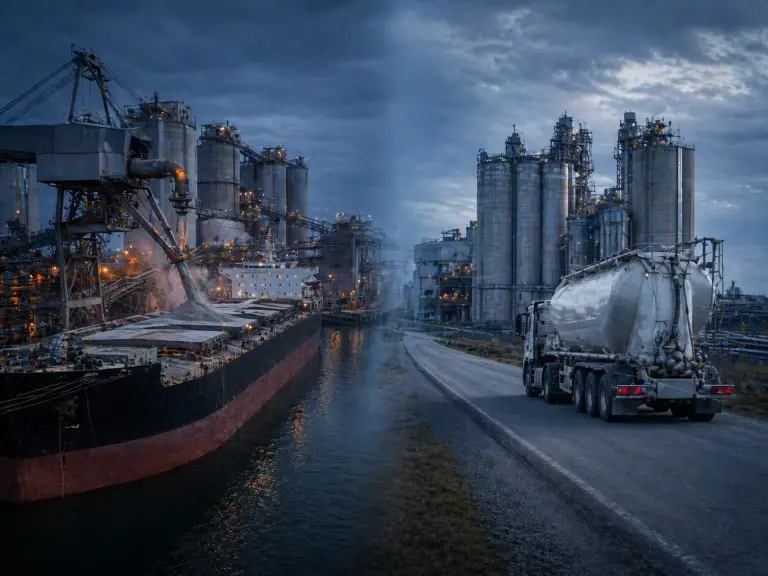
At port, discharge equipment varies by commodity. Iron ore and coal use grab cranes and conveyor belts. Grain terminals use pneumatic suction elevators. Cement and fine powder materials require enclosed conveyor systems or pneumatic discharge lines to prevent moisture contact during transfer. After port discharge, most dry bulk commodities need road or rail haulage to reach processing plants, power stations, or storage silos.
At this land leg, the commodity’s physical handling requirements—the same variables that drove vessel and terminal selection upstream—determine the right road transport configuration. Dry bulk pneumatic trailers handle powdered materials such as cement and fly ash using sealed pressure tanks and pneumatic discharge systems that protect the product from moisture throughout transit. The bulk cement trailer working principle differs significantly from open-top configurations used for coarser materials like coal or aggregates, and selecting the wrong type at this stage typically results in product spoilage or non-compliant discharge at the receiving silo.
Conclusion
Dry bulk classification comes down to three consistent conditions: solid physical state, unpackaged form, and direct bulk loading. The major-minor commodity split, vessel selection, and port infrastructure requirements all follow from understanding those conditions first.
At Truckman, our manufacturing work on bulk semi-trailers—including cement tanker trailers built for pneumatic discharge—puts us in the road transport leg of the dry bulk supply chain. Cement and fly ash distribution from port terminals to inland silos is where commodity moisture sensitivity, silo back-pressure tolerance, and haul distance drive trailer specification decisions far more than general payload targets. In routes where multiple transfer points are involved, we find that tank seal condition and discharge pressure rating require individual verification at each load cycle rather than assumed carry-over from prior runs.
If your operation involves road transport of powdered dry bulk materials—cement, fly ash, or similar—share your commodity type, route profile, and silo discharge requirements with our team. If you are still evaluating trailer options, our guide on how to choose a cement tanker covers the key specification variables in detail. Tank capacity, discharge pressure rating, and axle configuration all depend on those specific operational conditions, and we verify each one before finalizing any trailer design.
FAQ
What is dry bulk cargo?
Dry bulk cargo is any solid commodity shipped in loose, unpackaged form—poured or conveyed directly into a vessel’s hold rather than loaded in containers or bags. Common examples include iron ore, coal, grain, cement clinker, and fertilizers.
What is the difference between dry bulk and wet bulk?
Dry bulk consists of solid materials transported in open cargo holds or sealed dry tank systems. Wet bulk refers to liquid commodities—crude oil, chemicals, vegetable oils—transported in sealed liquid tank vessels. The distinction determines vessel type, discharge system, and port terminal at every stage of the supply chain.
What are the major dry bulk commodities?
UNCTAD shipping statistics have historically grouped five commodities as major bulks: iron ore, coal, grain, bauxite and alumina, and phosphate rock. Many commercial shipping sources today identify iron ore, coal, and grain as the three primary major trades, with the others classified as minor bulks. Both definitions appear in active use. The key point is that these commodities dominate bulk carrier chartering markets and move on dedicated long-haul routes.
Is cement considered dry bulk cargo?
Cement clinker and powdered cement are both classified as dry bulk when transported in unpackaged loose form. Powdered cement requires pneumatic handling at each transfer point because moisture contact causes irreversible hardening—a constraint that sets it apart from coarser dry bulk materials like coal or aggregates. For operators evaluating road transport options, understanding the full transporting cement tankers process clarifies why equipment selection differs from general bulk haulage.
How is dry bulk cargo measured?
Dry bulk is measured in metric tons (MT) for weight-based contracts or cubic meters for volume-based ones, depending on the commodity’s density. Dense materials like iron ore are weight-limited in practice; lighter materials like grain or fertilizers are often volume-limited. The limiting factor—weight or volume—determines effective payload capacity of the vessel or trailer, and both constraints should be verified against the commodity’s stow factor before finalizing a transport contract.