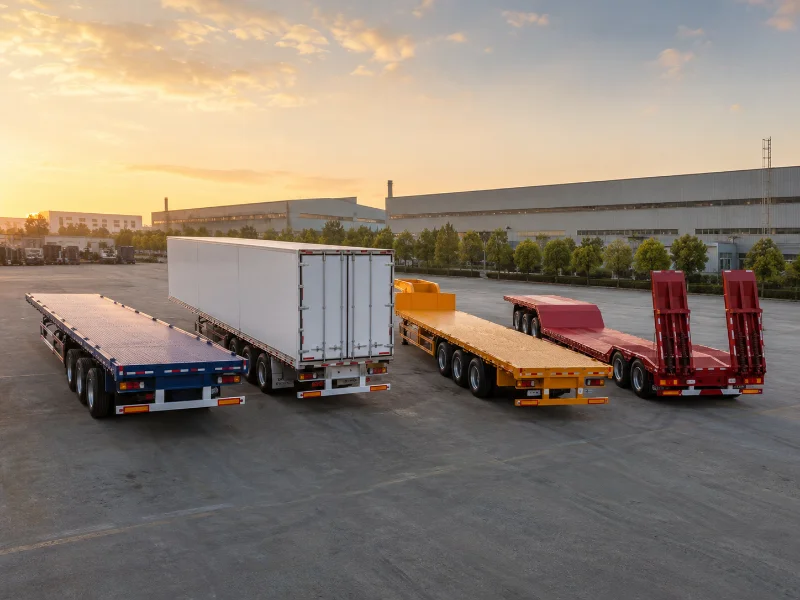
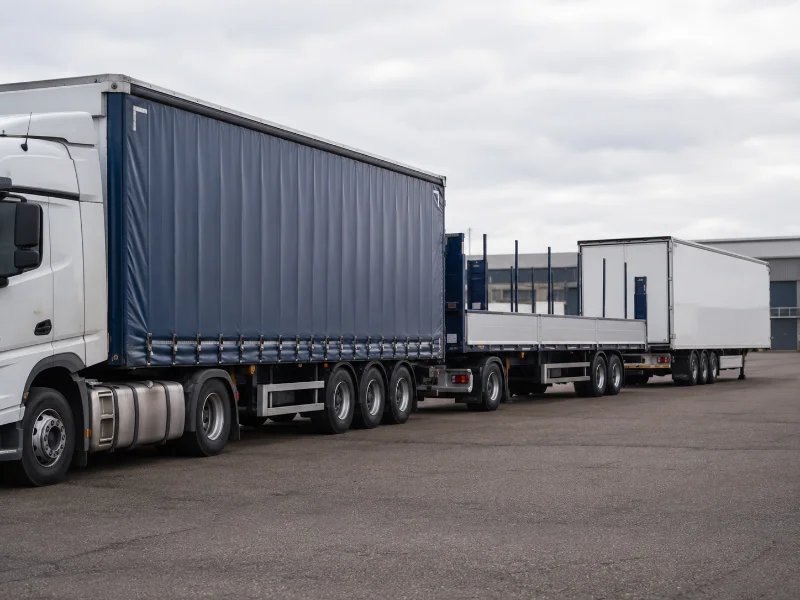
Evaluating semi trailer manufacturers means matching a builder’s specialization and certifications to your cargo type, destination market, and after-sales needs, rather than judging on headline price or brand name alone. The right supplier depends on what you haul (dry van, flatbed, lowbed, tank, or dump), where the trailer will be registered and driven, and whether you need destination-market certification, spare parts, and warranty support in that region. A dependable manufacturer holds verifiable quality certifications such as ISO 9001, builds to the safety standards that apply in the destination market, and can document axle specifications, materials, and lead times on request. Confirm those fundamentals before comparing quotes.
Who the Established Semi Trailer Manufacturers Are?
Buyers researching semi trailer manufacturers usually start by recognizing a handful of established names, which is useful orientation but not yet a shortlist. The table below maps several long-running builders across the major producing regions and what each is primarily known for. It is a map of the landscape, not a ranking.
| Manufacturer | Base / main production | Primarily known for |
|---|---|---|
| Great Dane | United States | Dry vans, refrigerated vans, flatbeds |
| Wabash (formerly Wabash National) | United States | Dry vans, reefers, tank trailers, platforms |
| Utility Trailer | United States | Dry vans, refrigerated vans, flatbeds |
| Hyundai Translead | San Diego, US (HQ); production in Mexico | Dry and refrigerated vans, chassis, dollies |
| Fontaine | United States | Platform and heavy-haul trailers |
| Stoughton Trailers | United States | Vans, grain trailers, intermodal chassis |
| Schmitz Cargobull | Germany | Reefers, curtainsiders, tippers; Europe’s leading builder |
| Krone | Germany | Curtainsiders, reefers, dry box, container chassis |
| Wielton | Poland | Tippers and curtainsiders; strong across Central/Eastern Europe and Africa |
| CIMC (US brand: Vanguard) | China | High-volume vans and a broad export range |
These span North America, Europe, and Asia, and trade directories such as the Truck Trailer Manufacturers Association list dozens more, including tank, dump, and agricultural specialists. A familiar name answers one question: does this company exist and build at scale. It does not answer the question that decides your order, which is whether the company builds the right trailer, to the right standard, for where you operate. A brand that specializes in refrigerated vans is not automatically the right partner for a mining dump body, and a domestic-focused builder may not offer the certification package an export order needs. Treat the well-known names as reference points for what a mature builder looks like, then measure any candidate, established or newer, domestic or overseas, against the criteria below.
Where Buyers Go Wrong Comparing Manufacturers
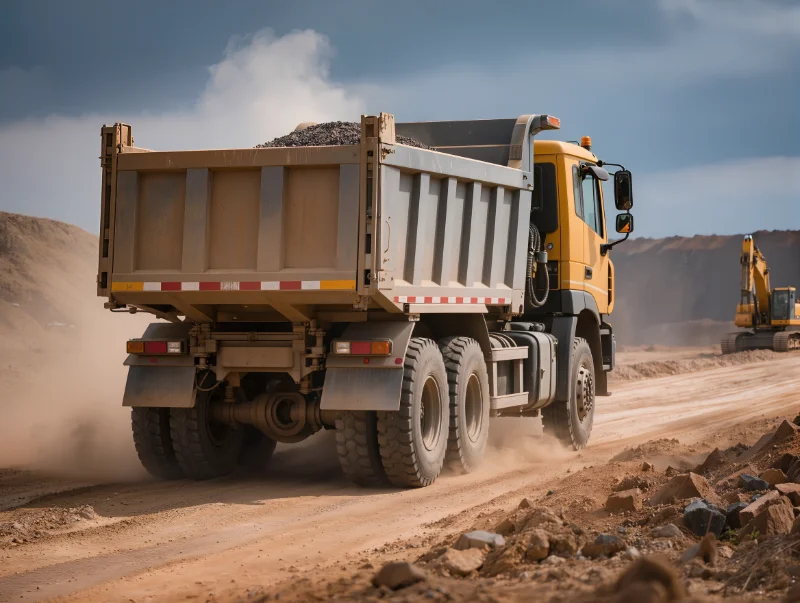
Most sourcing mistakes trace back to one habit: ranking manufacturers by brand name or lowest quote before checking whether a builder’s specialization and market compliance actually fit the job. The company at the top of someone else’s list may build excellent dry vans while you need a mining-grade dump body such as a side tipper trailer, and a strong reputation in the wrong category is still the wrong supplier.
The lowest quote carries a related trap. A number that looks cheaper often omits something that surfaces later: lighter axles than your terrain demands, no certification package for your country, or a shorter warranty. A quote is only comparable once every builder is pricing the same specification.
Sometimes the honest answer is that you do not need a premium or imported builder at all. For short-haul routes carrying standard dry freight, a domestic volume manufacturer, or a well-maintained used trailer from an established brand, can cover the work at a fraction of a custom order’s landed cost. A specialized or overseas manufacturer typically earns its price when your cargo, axle configuration, or destination-market rules fall outside what standard production lines already handle.
What Makes a Semi Trailer Manufacturer Reliable
A reliable semi trailer manufacturer earns that label through verifiable certifications, consistent build quality, and a product focus that fits your dominant cargo, not through catalog size or advertising. Four things carry most of the weight, and they do not all matter equally for every buyer.
The first is certification and standards compliance, and it is easy to misread. ISO 9001 covers a builder’s quality-management system rather than the trailer itself, so it signals process discipline, not roadworthiness. Roadworthiness comes from the safety regime of the market where the trailer will operate, and those regimes work differently. FMVSS, the U.S. federal motor vehicle safety standards enforced by the NHTSA, is a set of separate standards covering items such as lighting (FMVSS 108) and air-brake systems (FMVSS 121). The United States relies on manufacturer self-certification rather than government pre-approval, while other markets apply their own type-approval rules. When a manufacturer advertises any certification, the first detail worth checking is the certificate number and issuing registrar, not the badge on the page, because certificates lapse and some cover only part of a production process.
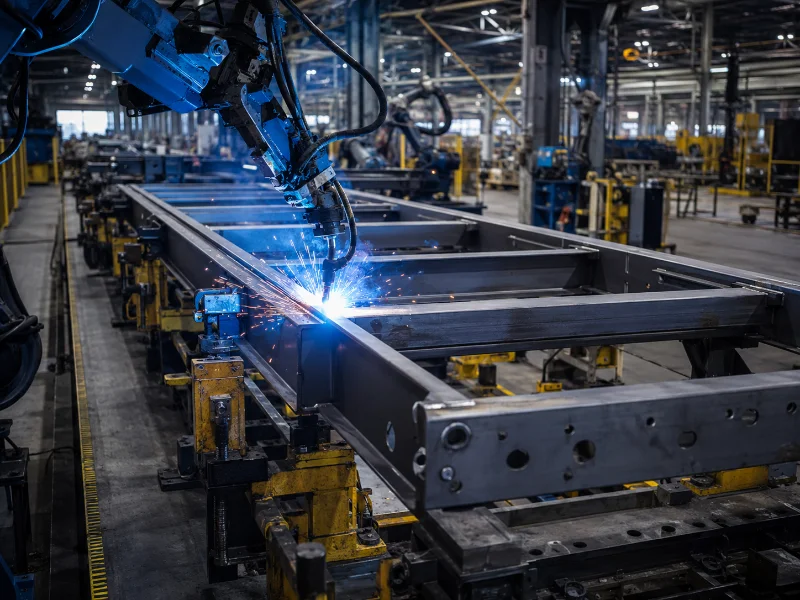
The second is build quality: steel grade or aluminum choice, weld consistency, corrosion treatment, and running gear (axles, suspension, and braking) sourced from established component makers. The third is specialization. A builder whose lines are tuned to your cargo family will usually deliver a better trailer than a generalist stretching outside its core. The fourth is after-sales and parts availability in your region, which becomes decisive the moment an imported trailer needs a replacement part.
Two of these deserve confirmation before the rest: whether the manufacturer’s specialization matches your dominant cargo, and whether it can meet the safety and certification requirements of the market where the trailer will run. Both are effectively locked in once a trailer is built. A well-priced maker of fuel tanker trailers cannot become the right partner for a heavy-haul lowbed order after the fact, and a trailer that cannot be registered at its destination has no value no matter how well it is welded. Certification details and price comparison follow those two checks.
Matching a Manufacturer to Your Cargo and Market
Semi trailer manufacturers divide along two axes that matter to buyers: the trailer families they specialize in, and whether they build in your market or for export, with each axis shaping lead time, cost, and support. Knowing where a builder sits helps you shortlist faster and avoid asking a specialist to work outside its strength.
| Manufacturer category | Typical products | Best fit for | What to verify first |
|---|---|---|---|
| Full-line OEM | Dry van, reefer, flatbed, tank under one brand | Fleets wanting one supplier and broad parts/dealer coverage | Depth of the specific line you need, not just breadth |
| Flatbed / heavy-haul specialist | Flatbed, lowbed, extendable, RGN | Oversized, machinery, and construction haulers | Capacity rating and axle configuration for your loads |
| Tank / bulk specialist | Petroleum, chemical, food-grade, pneumatic | Liquid and dry-bulk haulers | Applicable cargo-tank spec, pressure-vessel, material and inspection requirements for the commodity and market |
| Dump / tipper & specialty | Dump, side-dump, agricultural, container chassis | Mining, aggregate, agriculture, intermodal | Body material and payload rating for the terrain |
| Domestic (in-market) builder | Region-specific range | Buyers needing fast support and local certification | Unit cost versus the shorter lead and logistics |
| Export / overseas manufacturer | Often full-line at lower unit cost | High-volume, price-sensitive orders | Certification, logistics, and a parts channel for your country |
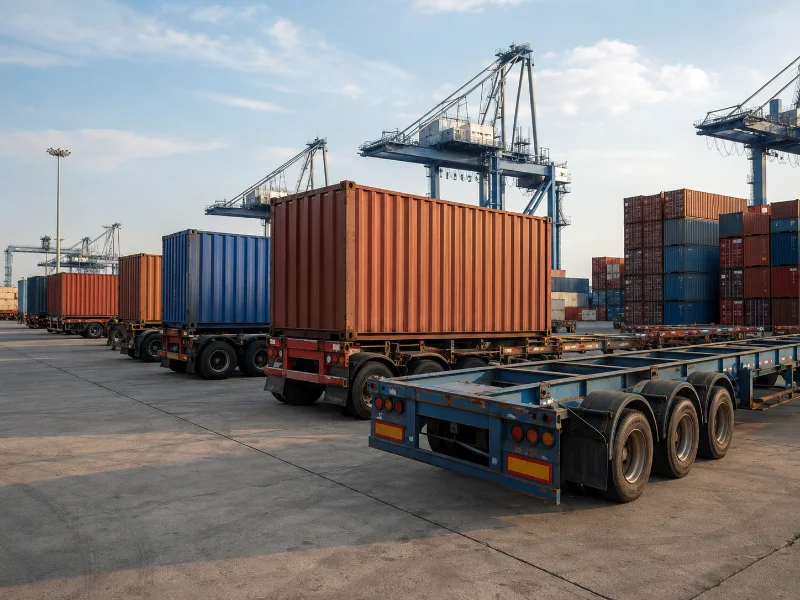
Most buyers end up comparing across these categories rather than within one. Choosing the exact configuration for a given load, such as axle count, deck height, and capacity, is a separate step handled once the shortlist is set. If you already know the trailer format you need, our guides to choosing a flatbed semi trailer and a low bed semi trailer walk through that stage.
Certification requirements are the axis buyers most often underestimate, because a different market is rarely just a different badge. Dimensions, axle loads, braking, lighting, and plating rules can all change.
| Destination market | Confirm first |
|---|---|
| United States | Self-certification to the applicable FMVSS, VIN/WMI documentation, and the certification label; the US relies on manufacturer self-certification, not government pre-approval |
| EU / EEA | The type-approval route under Regulation (EU) 2018/858, the EU vehicle type-approval framework; trailers fall in category O (O3 for 3.5–10 t, O4 for over 10 t) |
| United Kingdom | GB type approval or Individual Vehicle Approval (IVA), depending on volume and build |
| Other markets | Local registration, axle-load, dimension, braking, lighting, and import-certification rules |
How to Verify a Semi Trailer Manufacturer Before You Commit
Verifying a semi trailer manufacturer before a deposit means confirming three things before production starts, in sequence: active certifications, a sample or first-article build, and written specifications. The order is deliberate.
Start with certifications. Confirm each certificate number and issuing body against the registrar’s records, and read the scope: an ISO 9001 certificate confirms quality-management processes, not product safety approval, so it does not replace destination-market certification. For the US, ask the supplier to identify the individual FMVSS requirements that apply to your exact trailer model rather than accepting a blanket “FMVSS compliant” statement. Next, verify the build: request build-specific photos or video of your order, arrange a first-article inspection, or commission a third-party factory audit, and ask for references from buyers in your own market. Website logos and stock imagery are marketing, not evidence. Finally, lock the specification in writing before any deposit: axle rating and suspension type, steel grade and corrosion treatment, tire specification, warranty terms, lead time, and, for imports, Incoterms and the destination port.
Running these checks in that order, certification route then sample build then written spec, tends to surface problems before tooling and production are paid for. Reverse it, and the gaps tend to appear afterward.
Where to Start When Shortlisting a Semi Trailer Manufacturer
One step gets skipped under deadline pressure more than any other: signing off on a quote before the destination-market certification route and the exact axle and material specification are fixed in writing. It is the step that most often turns a good price into an expensive delay. Two variables decide most of the outcome: whether the builder’s specialization fits your dominant cargo, and whether the trailer can be certified and supported in the market where it will run.
Truckman builds semi trailers for export markets, and for each order we confirm the destination country, the applicable registration or certification route, axle and braking requirements, and the documents supplied before production begins. You can see our range on the semi trailer manufacturers page. In practice, the orders that go most smoothly are the ones where axle rating, material grade, and certification were settled before any deposit changed hands, which is why the inputs below matter as much on our side as on yours.
Before requesting a quote, have these ready:
| Spec group | Provide |
|---|---|
| Mass | Tare weight, payload, GVWR and GAWR |
| Dimensions | Overall length, width, deck height, axle spread, kingpin location |
| Running gear | Axle count and rating, suspension type (mechanical or air), tire and rim spec |
| Braking | Drum or disc, ABS/EBS, and the braking standard for the destination market |
| Structure & finish | Main-beam steel grade, key plate thicknesses, corrosion treatment |
| Documentation | Drawings, certificates, inspection reports, spare-parts list |
| Acceptance | First-article inspection, third-party check, factory test terms |
| Commercial & market | Destination country and its certification route, quantity, delivery window, Incoterms and port |
With those in hand, a short technical confirmation call up front, walking through axle rating, material grade, and certification for your destination, can replace rounds of quote revisions and give you a comparison built on identical specifications.
FAQ
Does a bigger manufacturer always mean a better trailer?
No. Scale signals production capacity and support reach, but not fit for your specific cargo. A focused specialist can out-build a full-line giant for a niche application such as heavy-haul or food-grade tank work, while a large generalist may treat that same order as an exception to its main lines. Match the builder’s core strength to your dominant cargo before weighing company size.
What certifications should a semi trailer manufacturer have?
ISO 9001 is a useful quality-management indicator, but it is not a substitute for product-specific regulatory compliance, engineering documentation, or destination-market certification. What a trailer legally needs depends on where it will run: self-certification to the applicable FMVSS in the United States, type-approval under Regulation (EU) 2018/858 in the EU, or the equivalent regime elsewhere. The scope of each certificate matters as much as its presence.
What is the difference between a semi trailer manufacturer and a dealer?
A manufacturer builds the trailer; a dealer or trading company resells trailers built by others and may not control specifications, quality, or warranty. When sourcing, confirm whether you are dealing with the actual builder or an intermediary, because it affects how far a trailer can be customized, who honors the warranty, and how transparent the pricing is.
Should I buy from a domestic manufacturer or import from overseas?
Whether to buy domestically or import depends on order volume, price sensitivity, lead-time tolerance, and whether local parts and certification support are essential. Short-haul operations running standard freight often favor a domestic builder for faster support, while high-volume, price-sensitive orders may justify a vetted export manufacturer once certification and logistics are confirmed. Selecting the trailer’s type and configuration for your cargo is a separate decision that follows supplier selection, and one this guide does not attempt to settle for you.
For rail intermodal service, does a trailer need AAR compliance?
Only equipment intended for trailer-on-flatcar (TOFC) or other North American rail-interchange service needs to meet AAR interchange rules, and the exact requirements should be confirmed with the rail operator or in the purchasing contract. A trailer built purely for over-the-road use does not automatically need AAR compliance, so match the standard to how the equipment will actually move.
How long does semi trailer manufacturing and delivery take?
Lead time depends on whether the build is a standard configuration or custom, and on shipping distance. Standard specifications ship sooner than bespoke orders, and imports add ocean freight and customs clearance on top of production. Ask whether a quoted lead time covers production only or production plus logistics to your port, so the delivery date reflects the full journey.