Choosing a semi trailer starts with the cargo, not the catalog. The trailer that moves steel coils is the wrong tool for frozen produce. The one built for an excavator will not clear the same bridges as a dry van. As a semi-trailer manufacturer, we spec each unit around the load, the loading method, and the route. This guide covers the main types of semi trailers and what each one hauls. It also lays out the typical semi trailer dimensions to expect and how we match a design to the job.
What Separates One Semi-Trailer Type From Another
Semi-trailer type depends on three things: the cargo’s shape, its weight, and how it loads. A semi-trailer carries part of its weight on the tractor’s fifth wheel. Every category on the road answers those three constraints in a different way.
We read a trailer through four lenses before recommending one. The first is enclosure: open platform or closed box. The second is deck geometry, or how high the deck sits and whether it steps down. The third is the loading method the cargo allows: rear dock, side access, crane, or drive-on. The fourth is any special system the load needs, such as cooling, dumping, or liquid containment.
Deck height shows why this matters. A load that stands eleven feet tall on a standard flatbed will break legal travel height. So we drop or step the deck, then confirm the loaded height before the unit ships. We clarify all four variables with a buyer first. One cargo can fit two or three configurations at very different costs.
The Mistake That Drives Most Wrong-Trailer Decisions
The most common semi trailer, the dry van, fits general freight but not oversized or temperature-controlled loads. Familiarity drives the choice more than fit does.
Spec the familiar enclosed van for cargo that is oversized or temperature-sensitive, and the result is predictable. The load will not fit. A reefer gets rented at the last minute. The shipment arrives damaged. Each outcome is avoidable. The fix is to start from the cargo’s hardest constraint, not the trailer’s availability. In our experience, the units that come back are rarely defective. They were specced against an assumption, a weight or a dock or a route height that nobody checked.
We prevent this by working from the load’s tightest limit first. That limit might be height, weight, temperature, or loading method. Only then do we compare the families that can meet it.
The Main Types of Semi Trailers and What Each One Hauls
Semi trailers fall into a few working families, and the cargo’s shape, weight, and protection needs decide which one fits. We design and build across these categories. The table below compares them by the variables that drive most decisions.
| Trailer type | Typical length | Width | Typical deck / interior height | Best-fit cargo | Key check |
|---|---|---|---|---|---|
| Dry van | 48–53 ft | ~102 in overall | Interior height varies by build | Palletized general freight | Door opening; no temperature control |
| Reefer (refrigerated) | 48–53 ft | ~102 in overall | Interior reduced by insulation | Food, pharma, cold chain | Temperature compliance; reduced payload |
| Flatbed | 48–53 ft | ~102 in overall | Deck often around 5 ft off ground | Steel, lumber, machinery | Width and loaded height; securement |
| Step deck (drop deck) | 48–53 ft | ~102 in overall | Lower rear deck for clearance | Taller machinery over flatbed height | Loaded height |
| Lowboy | Varies by build | ~102 in overall | Very low well deck | Tall, heavy equipment | Deck clearance; per-axle weight |
| RGN (removable gooseneck) | Varies by build | ~102 in overall | Low well, detachable front | Drive-on heavy equipment | Per-axle weight; permits |
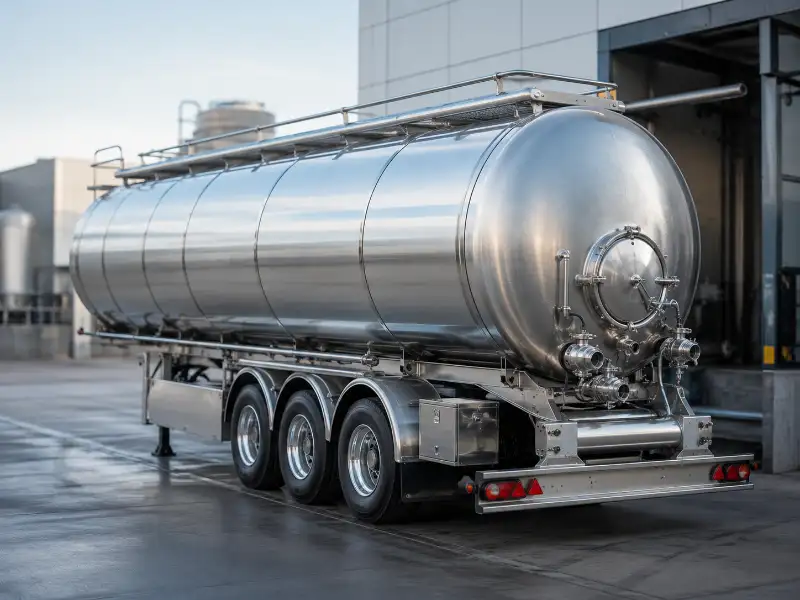
| Tanker / bulk | Varies by tank design | Varies by tank | N/A | Liquids, gases, dry bulk; food-grade or chemical by design | Commodity compatibility; baffling and surge; hazmat |
| Extendable / stretch | Extends by model | ~102 in (base) | Depends on base trailer | Long beams, blades, pipe | Extended length; route permits |
| Curtain-side / Conestoga | 48–53 ft | ~102 in overall | Enclosed with side access | Loads needing weather cover and side loading | Side clearance; securement |
| Container chassis | Sized to container (e.g. 20 / 40 ft) | ~102 in overall | Frame only, no deck | ISO shipping containers | Container size match; locking points |
Figures are typical and vary by manufacturer, model, and axle setup. Confirm exact dimensions and capacity for a specific build.
Open-Deck Trailers
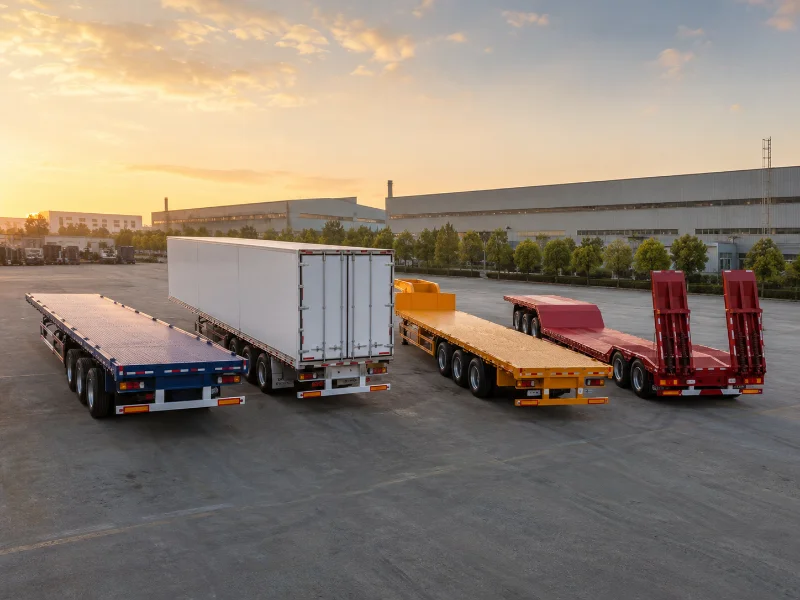
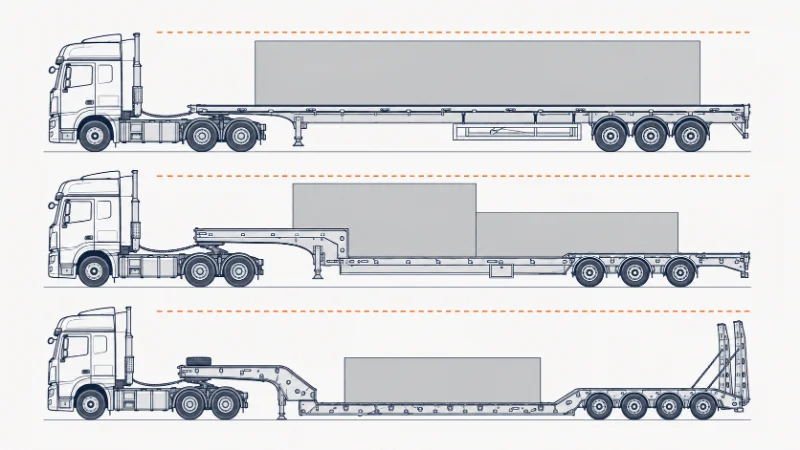
Open-deck trailers carry loads from the side or top and ride exposed. Deck height and length decide the choice among the flatbed trailer types and their variants. A standard flatbed handles cargo up to legal height. When the load is taller, a step deck adds a lower rear deck for clearance. An extendable model stretches for beams and blades that overhang a fixed deck. We compare these by the loaded height and length a buyer has, since moving up the family adds capability and cost together. How each open-deck load is then secured falls outside trailer selection. Tie-down counts, edge protection, and blocking follow separate federal rules at the loading stage.
Enclosed and Temperature-Controlled Trailers
Enclosed trailers protect the load from weather and theft, and the tradeoff is access and temperature control. A dry van suits general freight that loads at a dock and needs no climate control. A reefer adds insulation and a cooling unit for perishables, which cuts usable payload and adds a maintenance point. For food that needs temperature control for safety, the trailer is only one part of compliance. The shipper and carrier still set the temperature range, pre-cooling, sanitation, and monitoring records. A curtain-side gives the weather protection of a van with the side access of a flatbed. We align the enclosure type to whether the load needs protection, temperature, or fast side loading.
Heavy-Haul and Specialty Trailers
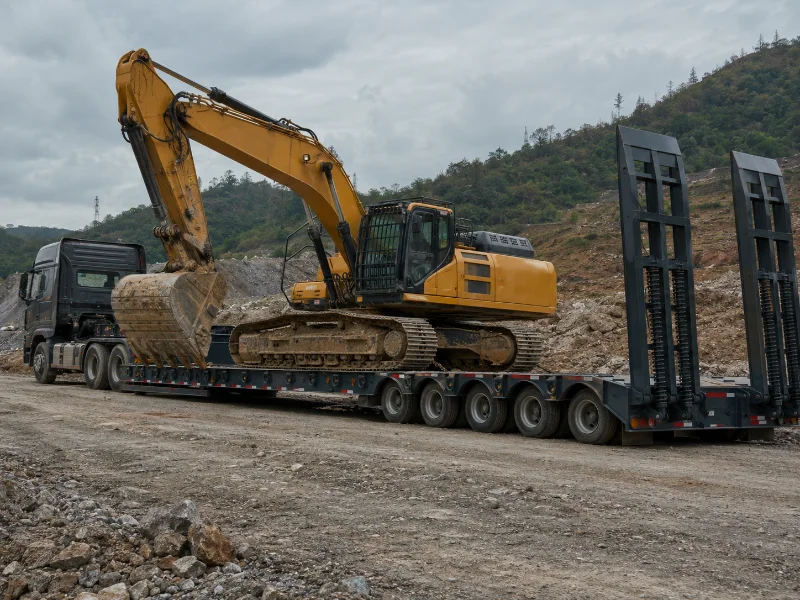
Heavy-haul and specialty trailers begin where standard families stop, and deck clearance and axle capacity become the deciding variables. Lowboy describes the low-deck shape that keeps tall equipment under legal height. RGN describes a gooseneck front that detaches so equipment can drive on. Many heavy-haul trailers are both, and multi-axle versions spread weight that would break legal limits. The tanker trailer types split further by what they carry. A food-grade tank, a fuel tank, a chemical tank, and a dry-bulk tank differ in lining, baffling, cleaning, and hazmat handling. Dump trailers, hopper bottoms, car haulers, and livestock trailers each serve one narrow use. We verify loaded height and per-axle weight before confirming these builds. A few inches or a misplaced axle can break legal compliance.
How to Match a Trailer Type to Your Cargo and Route
Matching a trailer to a job comes down to four questions about the cargo and the route. Answer them in the order of how hard each one is to work around. The tightest constraint usually decides the trailer.
- What are the load’s real dimensions and weight, including anything that overhangs or stacks?
- How will it load and unload: dock, crane, forklift, drive-on, or ground level?
- Does the cargo need protection from weather, theft, or a set temperature?
- What does the route restrict: bridge heights, weight-limited roads, or permit thresholds?
The order matters, because one answer can rule out whole families. A load that must stay under legal height removes the standard flatbed before cost or availability matters. We work through these questions with the buyer. We align the deck height, length, and axle count to the tightest answer, then confirm the loaded dimensions against the real route.
What to Verify Before You Commit to a Configuration
Before you finalize a configuration, three numbers decide whether a trailer is legal on a given lane: loaded height, gross weight, and axle spacing. Each one varies by jurisdiction. Get these wrong and a good trailer ends up stranded.
On the US Interstate System, the federal baseline is 80,000 lb gross vehicle weight. That figure is also subject to single-axle limits near 20,000 lb, tandem-axle limits near 34,000 lb, tire limits, and the Federal Bridge Formula. Legal travel height runs near 13 ft 6 in in many states. But state and route set it, not one federal rule, so verify both for your lanes. Permit rules for oversize or hazmat loads also change by state and by load. Confirm what your route requires before a build is final. We verify loaded height, gross weight, and axle layout against a buyer’s route before any build is confirmed.
Conclusion
Three things decide the right semi trailer more than any catalog: the cargo, the loading method, and the route. Get those clear and the list of suitable types narrows fast.
The configurations that hold up are specced against real numbers, not assumptions. A loaded height someone measured. A route someone checked. The details that most need project-level confirmation are the loaded dimensions, the gross weight under your axle setup, and any route-specific height or permit cap. All of them depend on your lanes.
If you are weighing a purchase or a custom build, prepare three things: your cargo’s dimensions and weight, its loading method, and the routes it will run. Send us those, and we will compare the suitable options across our Semi Trailer range and flag what still needs checking. Contact us to request a configuration review for your load.
FAQ
What is the most common type of semi trailer?
Dry vans are the most common type for general freight. They fit standard docks, lock for security, and handle broad palletized loads. Oversized, liquid, or temperature-controlled cargo needs a different type.
Which semi trailer is best for hauling heavy equipment?
Lowboy and RGN trailers handle the heaviest, tallest equipment. The pick between them depends on whether the load must drive on from the front and how many axles the weight needs.
Do I need an RGN or a standard lowboy?
An RGN and a lowboy often describe the same trailer, so the real choice is about loading. An RGN’s removable front lets equipment drive straight on, which helps with self-propelled machines. The full difference between a lowboy and an RGN comes down to that front and the deck shape.
Which trailer carries cargo too tall for a flatbed?
A step deck carries cargo too tall for a flatbed, because its lower rear deck buys back height under the legal limit. The full difference between a flatbed and a step deck is that second deck and the permit headroom it saves.
What trailer type carries shipping containers?
A container chassis carries ISO shipping containers. It is a bare frame with twist-locks sized to a 20- or 40-foot box, so the container itself holds the cargo.
How do I choose the right semi trailer?
Start with the load’s hardest limit: its height, weight, temperature, or how it loads. Match that limit to a trailer family, then check the route for height, weight, and permit caps. We run buyers through this with their own cargo and lanes before a build.