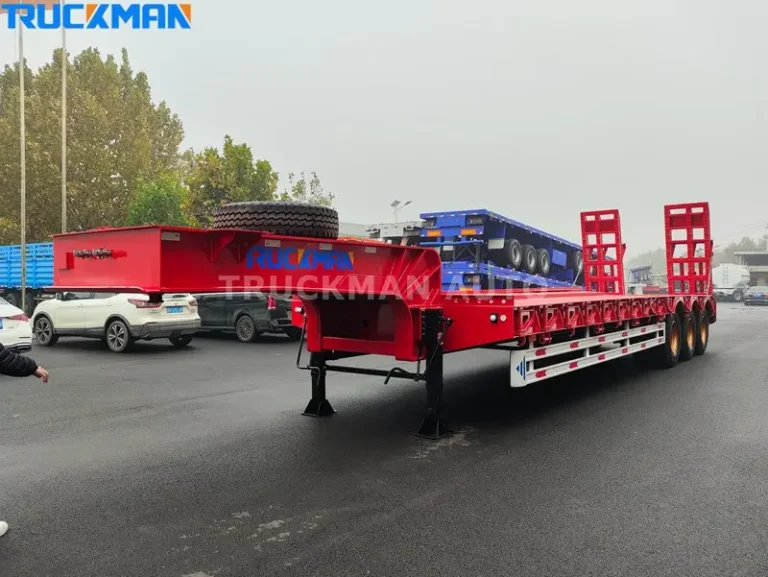
A low bed trailer hydraulic system controls gooseneck operation, deck height adjustment, ramp deployment, and steering response. The right configuration depends on trailer type, axle count, payload capacity, and loading method. Three key standards frame these systems. ISO 4413 covers hydraulic system safety. ISO 4406:2021 defines fluid contamination classification. SAE J1273 addresses hydraulic hose assembly practices. We design and specify these systems for heavy haul and oversized cargo transport across 2–6 axle low bed trailers. This article does not cover self-propelled modular transporters or platform trailers beyond 10 axle lines, which use different control architectures.
Hydraulic Subsystems and What Each Circuit Controls
Low bed trailers use up to four hydraulic circuits. Each one serves a distinct function tied to payload weight, deck geometry, and site conditions. Knowing which circuits a project actually needs prevents over-specification during procurement. For a broader overview of trailer functions beyond hydraulics, see our guide on features needed in a low bed semi-trailer.
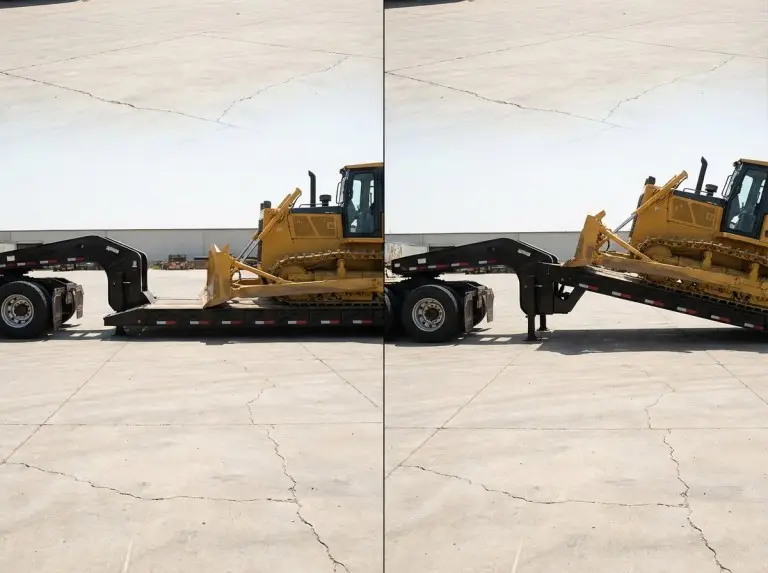
The gooseneck circuit uses hydraulic cylinders to detach, lower, or fold the front neck section. This allows front-loading of tracked and wheeled equipment. An RGN layout typically needs two main lift cylinders and one shoring cylinder. Folding gooseneck designs use a different cylinder arrangement to lower the deck without full detachment. In both cases, cylinder bore, stroke length, and mounting geometry must match the trailer’s structure and cargo loading envelope.
The suspension circuit enables deck height adjustment and platform leveling when hydraulic. In multi-axle setups with the right valve group logic, it can provide independent per-axle compensation. Each cylinder then responds separately to surface changes. Simpler hydraulic layouts may only offer group-level height adjustment, depending on valve bank design.
The ramp circuit powers hydraulic folding ramps on trailers built for frequent self-propelled equipment loading. It manages ramp angle and descent speed, which reduces equipment damage risk on uneven ground. The steering circuit on multi-axle trailers drives axle steering through hydraulic cylinders. Steering angles vary widely by manufacturer and axle design. Published figures range from about 25 degrees on basic layouts to over 60 degrees on specialized heavy-transport systems.
Why Hydraulic Specifications Get Mismatched
Hydraulic problems on low bed trailers trace more often to procurement errors than to manufacturing defects. We see this pattern repeatedly during pre-delivery drawing reviews.
A common mistake: selecting a hydraulic gooseneck trailer by payload capacity alone, without checking cylinder stroke against the cargo height. If the stroke is too short, the gooseneck cannot lower enough to create a usable loading ramp angle. The buyer then has to rear-load with extra equipment, losing the core advantage of the RGN design. We see this most when the cargo mix includes both tall and low-clearance machines. The cylinder stroke was sized only for the taller items.
A second frequent error is specifying hydraulic suspension for trailers that will mainly run paved highways. Hydraulic suspension adds cost, weight, and maintenance over mechanical leaf spring or air-ride options. It makes sense for multi-axle work on uneven ground or where frequent height adjustment is needed. It is not required above a fixed axle count. When teams skip the terrain and load capacity assessment, the result is predictable. They end up with an over-built system that inflates costs, or an under-built one that fails in the field. We catch these mismatches during scope confirmation, because fixing them after fabrication costs far more than getting the spec right upfront.
Core Components of the Hydraulic Power Pack
The power pack supplies energy to all hydraulic functions. Its specification depends on circuit count, flow rate, operating pressure, and available power source.
A standard low bed power pack includes a prime mover, a hydraulic pump, a fluid reservoir, and control valves. It also contains pressure relief valves and hose assemblies. For guidance on selecting these components, see our parts and accessories guide for low-bed semi-trailers. The prime mover is either a diesel engine or electric motor. Gear-type pumps suit cost-driven builds. Piston-type pumps handle higher pressure. Hose assemblies should follow SAE J1273 practices for routing, installation, and strain prevention. The pack may mount on the gooseneck, inside the chassis frame, or as a portable standalone unit.
Pump displacement and motor power must match total circuit demand. A trailer running only hydraulic ramps needs a smaller pack than one powering gooseneck lift, suspension, and steering at once. An undersized pack causes slow cycles and excess heat. An oversized pack wastes weight and fuel. Typical operating pressures in export and heavy-haul low bed trailers fall between 2,500 and 3,500 PSI. Actual system pressure depends on cylinder bore, load needs, and the OEM power unit spec. Relief valves come factory-preset. Field adjustment without OEM approval may void warranty coverage and creates safety risks addressed under ISO 4413.
Reservoir capacity sets how long the system runs before fluid overheats. In hot climates or during extended loading sequences, a small reservoir leads to heat buildup, fluid breakdown, and early seal failure. We verify reservoir sizing against the expected duty cycle during design. This accounts for ambient temperature range and consecutive cycle count.
Hydraulic Safety: Depressurization, Leak Detection, and Hose Integrity
Low bed trailer hydraulic systems run under high pressure. Ignoring safety procedures creates risks of fluid injection injury, burns, and uncontrolled cylinder movement.
Depressurize the entire system and isolate all stored energy before disconnecting any line or component. Residual pressure in accumulators, load-holding valves, or trapped fluid can cause sudden discharge even after shutdown. ISO 4413 covers pressure limitation and energy isolation. Operators should train on the specific lockout procedures in the trailer’s OEM manual.
Never locate leaks by touch. Pressurized fluid escaping through a pinhole can penetrate skin well below the system’s working pressure. This causes injection injuries that need immediate emergency medical care. Use visual inspection from a safe distance. Hold cardboard near suspected leak points if needed. Major lowboy OEM manuals and OSHA guidance both prohibit hand contact for leak detection.
Monitor hose condition per SAE J1273 lifecycle practices. Abrasion, heat, UV exposure, and repeated flexing degrade hoses over time, even when they look intact. Replace any hose showing external cracking, exposed reinforcement, kinking, or fitting weepage before the trailer works again under load. Replacement hoses must match the original spec for pressure rating, temperature range, fluid compatibility, and bend radius.
Maintenance Practices That Protect System Performance
Contamination is the single most common cause of early hydraulic component failure. System longevity depends on fluid condition, seal integrity, connection tightness, and duty cycle limits.
Check fluid for level, color, and contamination signs before each shift. Dark or cloudy fluid, a burnt smell, or visible particles mean the fluid needs replacement, not just top-off. Using the wrong viscosity is a frequent mistake. Operators sometimes grab whatever fluid is available instead of the manufacturer-specified product. This causes pump strain, extra heat, and faster seal wear. Use ISO 4406:2021 particle count classification to assess fluid cleanliness. Follow OEM datasheets for replacement intervals, verified by periodic lab analysis for viscosity, particle count, and wear metals. Do not rely on generic guidelines.

Inspect cylinders and seals for gradual wear that cuts efficiency. Piston rod scoring, seal extrusion, and internal bypass all reduce holding force and slow cycle times. On gooseneck lift cylinders, holding force directly affects load security during transport. Any loss of holding pressure needs immediate diagnosis. After any hose or fitting replacement, bleed the system fully by cycling each cylinder through its complete stroke. This matters most on systems with load-holding valves, where trapped air causes spongy response or cylinder drift.
Keep documented inspection logs with dates, findings, and part replacements. This history supports warranty claims and resale verification. For a complete maintenance schedule covering all trailer systems beyond hydraulics, see our guide on how to maintain low bed semi trailers.
Verification Steps Before Accepting a New Trailer
Acceptance testing should happen under representative load, not just static visual inspection. All circuits must meet specification and safety requirements before the trailer ships.
We confirm cylinder stroke against the required deck height range and power pack cycle time against loading frequency. We also verify relief valve settings against rated pressure. As our standard pre-delivery practice, we cycle the gooseneck through complete sequences at least three times. We check for smooth operation, leak-free connections, and consistent timing. This is our internal procedure. Buyers should confirm verification steps against their own quality standards. Timing variation between cycles may point to trapped air, a restricted valve, or poor pump priming.
For suspension, we run a loaded leveling test on uneven ground. This confirms that axle cylinders respond as designed and the control interface matches intended positions. Steering gets tested at full lock in both directions against the OEM spec sheet. Pressure readings, fluid temperature under sustained use, and electrical function for electronic valves round out the checklist. Document and resolve any deviations before the trailer enters service.
Conclusion
A correct hydraulic specification matches gooseneck type, suspension layout, power pack sizing, and ramp design to the actual operating profile. Confirming real variables beats relying on generic assumptions.
Our project experience shows that most hydraulic performance issues after delivery trace back to scope-phase specification errors. We address this through drawing reviews. These check cylinder stroke, power pack capacity, suspension type, and control configuration against the buyer’s real cargo, site, and route conditions. When the cargo mix spans highway and rough-terrain work, suspension and power pack specs need close attention. Duty cycle and temperature variables matter most here. Locking these inputs down early avoids rework that costs far more once fabrication starts.
Share your cargo dimensions, weight range, site conditions, and route restrictions. We review these against the trailer design to match every hydraulic subsystem to the job it will face. Reach out to our team or request a drawing review to begin.
FAQ
What does the hydraulic system do on a low bed trailer?
It powers gooseneck detachment or folding, deck height adjustment, ramp deployment, and axle steering on multi-axle setups. The exact functions depend on trailer type, axle count, and power pack layout.
How often should hydraulic fluid be replaced?
Intervals depend on operating hours, ambient temperature, contamination levels, and OEM specs. Check fluid condition before each shift. Use ISO 4406:2021 particle counts to measure cleanliness. Follow the manufacturer’s datasheets, backed by periodic fluid analysis.
What causes slow hydraulic cycle times?
Common causes include low fluid levels, trapped air, a worn pump, a blocked filter, or wrong fluid viscosity. On electric power packs, low battery voltage also slows motor speed and pump output. Start diagnosis with fluid level and condition, then move to pump and valve testing per the OEM manual.
What should be checked when receiving a new hydraulic low bed trailer?
Cycle all hydraulic circuits under load. Verify cylinder stroke against the drawing. Confirm relief valve settings. Inspect all hoses and fittings per SAE J1273. Test electronic controls and remotes. Document all deviations before the trailer goes to work.
Is hydraulic suspension necessary for every low bed trailer?
No. Standard 2–3 axle trailers on paved routes work well with mechanical or air-ride suspension at lower cost. Hydraulic suspension makes sense where frequent height changes, rough-terrain loading, or precise multi-axle load balancing are needed.