Tanker trailers are semi-trailers engineered to transport bulk liquids, gases, or dry materials, with the applicable tank specification determined by the cargo’s chemical properties, regulatory hazard class, and operational requirements. Choosing the wrong tanker type for a given cargo creates compliance violations, cargo contamination, and safety risk — all of which are avoidable at the specification stage.
What Is a Tanker Trailer?
A tanker trailer is a semi-trailer designed to transport bulk liquids, gases, or dry materials, with the applicable tank classification determined by the cargo’s chemical properties, pressure requirements, and regulatory hazard class. Tanker trailers are widely used across industrial, agricultural, energy, and food sectors to ensure the safe delivery of regulated and non-regulated cargo.
This type of trailer adopts a variety of design structures to adapt to different needs. The baffle type has a perforated internal divider to minimise liquid sloshing. Baffles reduce surge forces without separating cargo — liquid flows through the perforations — and are not a substitute for bulkheads when carrying multiple incompatible products. The bulkhead divides the tank into separate storage compartments for easy separation of different cargoes. Each compartment has its own outlet and valve system, allowing independent loading and unloading. Smooth-bore tanks are smooth and barrier-free, easy to clean and suitable for single-category transport.
The choice of tank material has a direct impact on transport safety. Lightweight aluminium reduces deadweight. Stainless steel offers high corrosion resistance. Carbon steel is known for its high strength and durability.
According to the differences in transport objects, tank trailers are also subdivided into four professional categories: liquid tankers, gas tankers, powder material tankers and bulk cement trailers. In the United States, the DOT specifies cargo tank motor vehicles under 49 CFR Part 178 based on the cargo’s pressure characteristics and hazard class. The four primary cargo tank specifications — DOT-406, DOT-407, DOT-412, and MC-331 — each define required construction standards, pressure ratings, and safety systems. The applicable specification must be confirmed before ordering, as it cannot be changed through retrofit after manufacture.
DOT Cargo Tank Specification Overview
Before reviewing individual tanker types, the table below summarizes the four primary DOT cargo tank specifications. Each specification applies to specific cargo types and cannot be substituted without re-certification.
| Specification | Primary Cargo | MAWP | Typical Material | Key Requirement |
|---|---|---|---|---|
| DOT-406 | Gasoline, diesel, aviation fuel | 2.65–4 psig | Aluminum | Bottom loading, vapor recovery at covered terminals |
| DOT-407 | Solvents, alcohols, chemical feedstocks | At least 25 psig | Stainless steel / aluminum | Higher pressure rating, circular cross-section |
| DOT-412 | Corrosive materials, acids, alkalis | At least 5 psig; vacuum-loaded designs require higher | Stainless steel + liner | Corrosion-resistant liner, double-wall options |
| MC-331 | LPG, propane, butane, anhydrous ammonia | Varies by gas | Carbon / alloy steel | ASME pressure vessel standards, multiple safety valves |
Note: MC-306, MC-307, and MC-312 are legacy specifications no longer used for new tank manufacture after 1995. Existing tanks marked MC-306 may still be in service where legally maintained and qualified under 49 CFR 180.405.
How each specification maps to valve ratings, inspection intervals, and loading system requirements is covered in our breakdown of cargo tank safety compliance requirements.
What Are The Type Of Tank Semi Trailer ?
Tanker trailer types are determined by cargo category and applicable DOT cargo tank specification — each type has specific construction, material, and safety system requirements that cannot be substituted across cargo classes without re-certification.
Food Grade Tank Semi-trailer
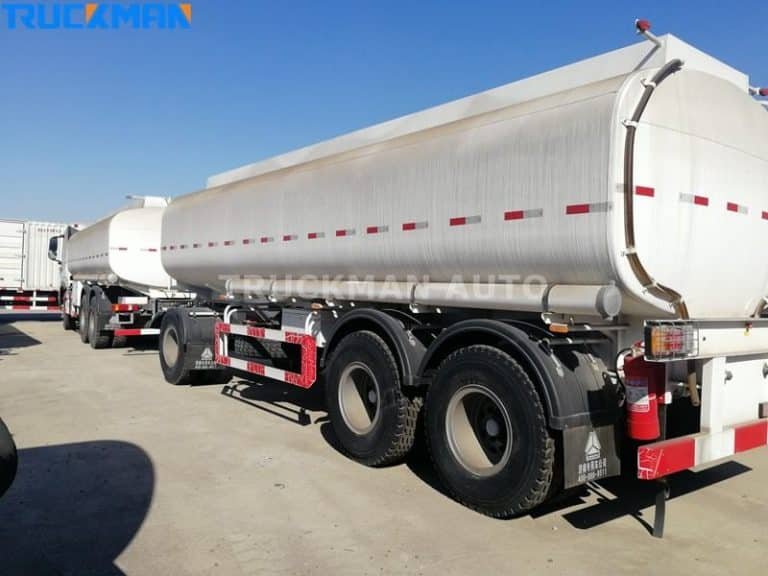
Food-grade tank trailers transport consumable liquids including milk, juice, and edible oils, and in the U.S. must comply with 21 CFR Part 1 Subpart O — Sanitary Transportation of Human and Animal Food — which requires cleanable design, sanitary condition, and temperature control where applicable. Where the operator or cleaning facility discharges wastewater from interior tank cleaning, EPA 40 CFR Part 442 may apply to the cleaning wastewater management process — this is an effluent guideline for cleaning discharge, not a general food hygiene standard for all food-grade tanker operations. For potable liquid applications, tank materials and coatings should also be confirmed against NSF/ANSI 61 requirements where applicable. Typical application scenarios include the whole cold chain transport of milk from farm to processing plant.
Chemical Transport Tankers
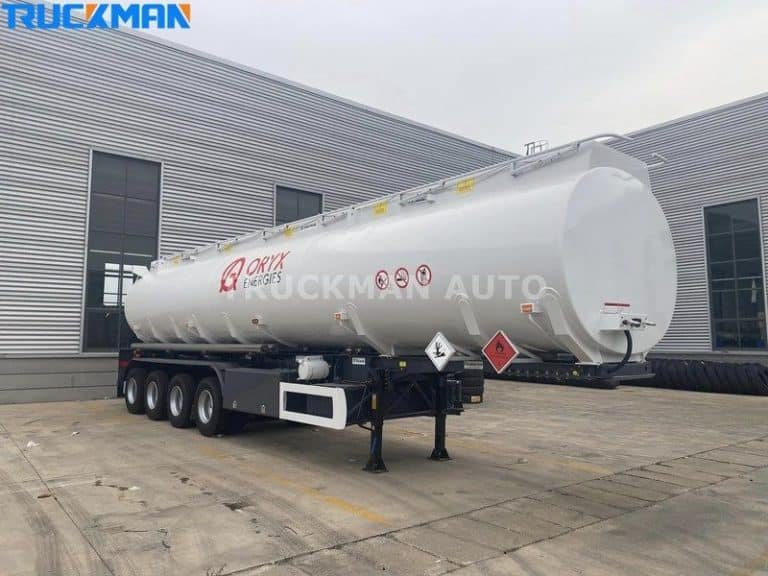
Chemical transport tankers carry corrosive, flammable, or toxic liquids typically specified as DOT-407 or DOT-412 depending on the cargo’s vapor pressure, corrosivity, and lading requirements — the applicable specification must be confirmed before ordering, as the two codes require different pressure ratings and liner specifications. Chemical tankers are commonly built from stainless steel or other cargo-compatible metals, with rubber, phenolic, or FRP liners used when the cargo attacks the base metal. It is commonly used by pharmaceutical companies to transport acidic raw materials, and the special structure can effectively prevent the risk of leakage. Operating a DOT-406 tank on DOT-412 cargo is a regulatory violation regardless of whether the cargo fits physically in the tank.
Fuel oil tank semi-trailer
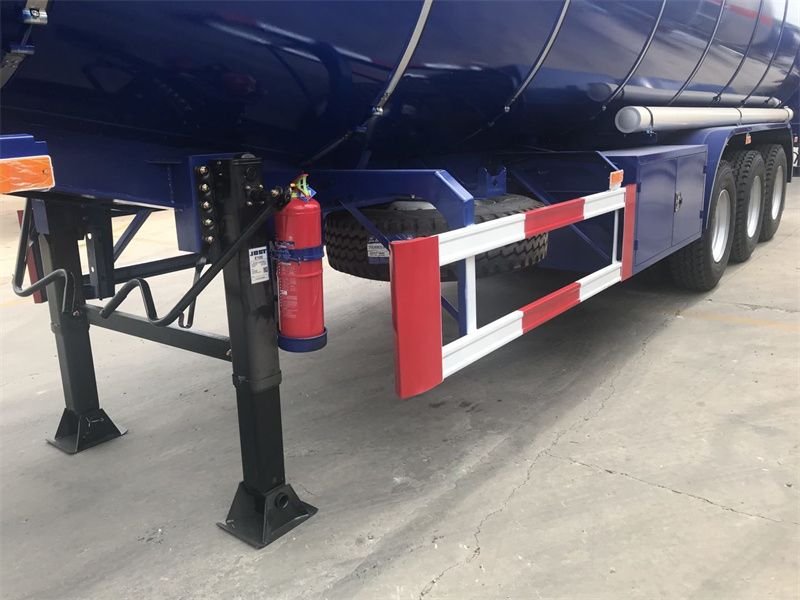
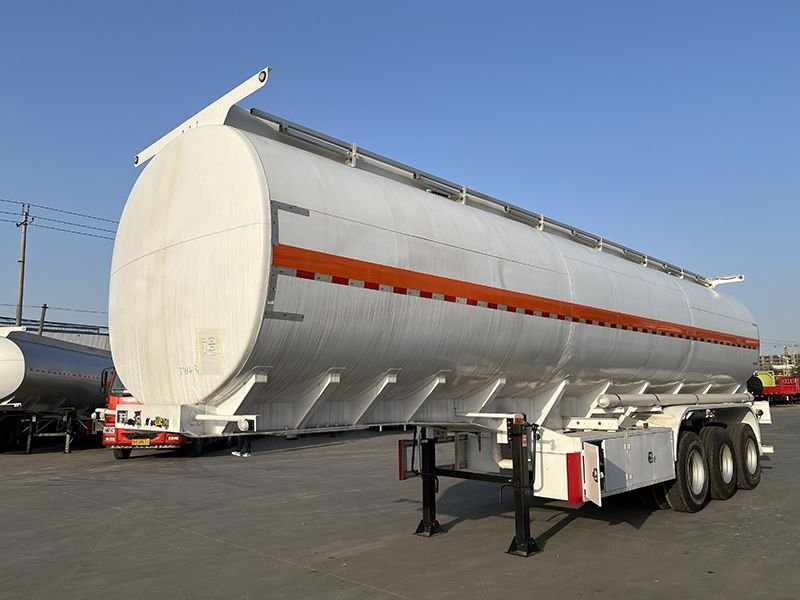
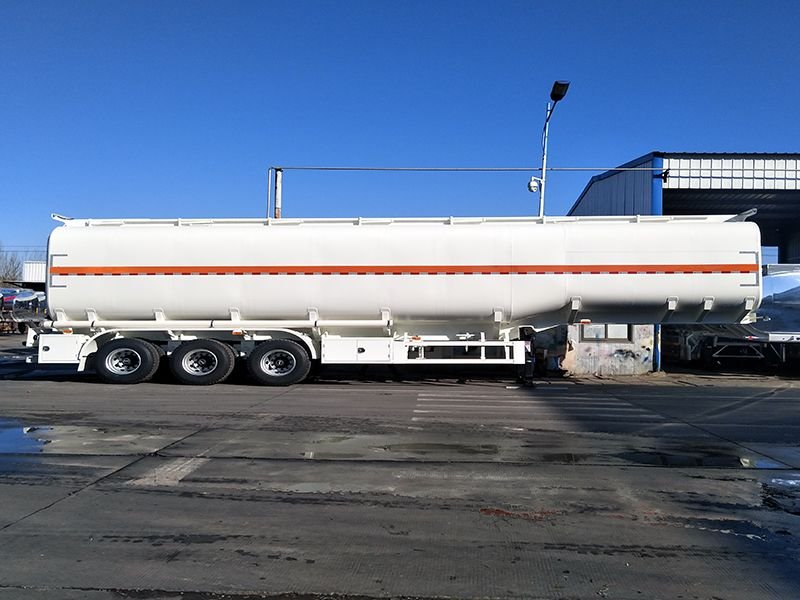
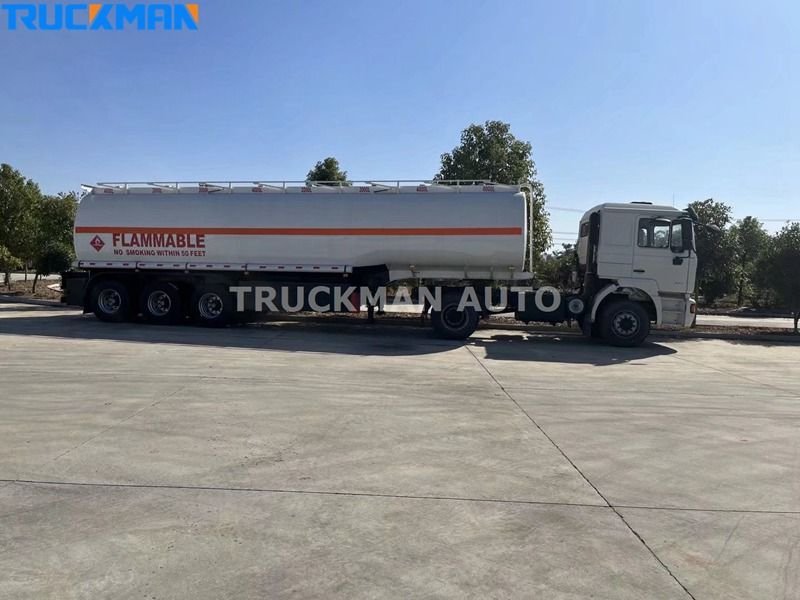
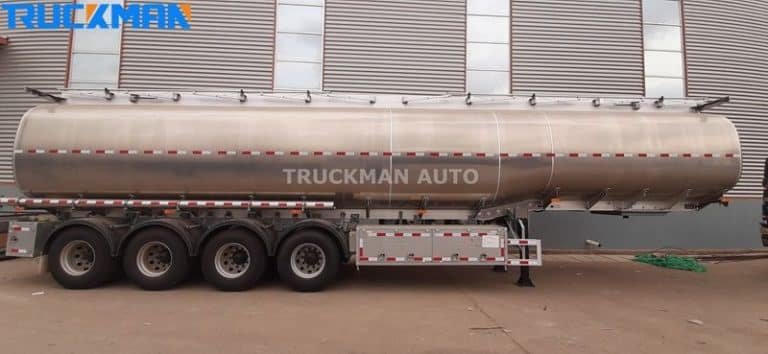
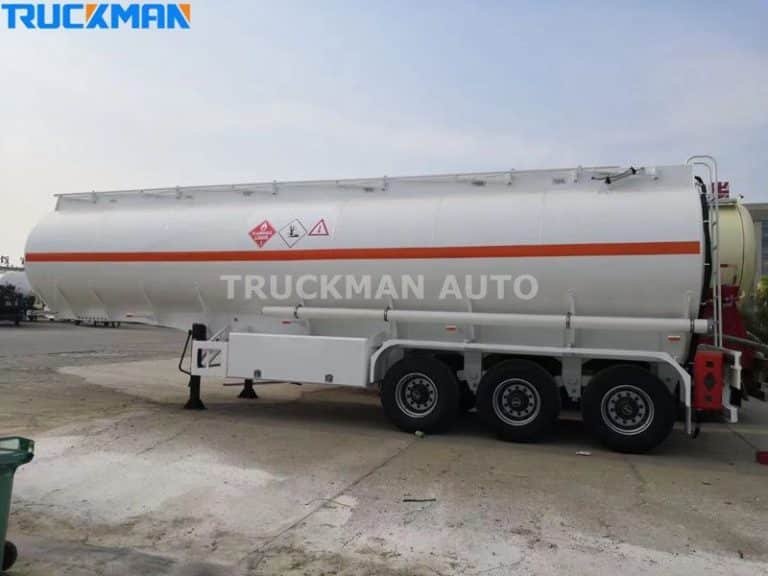
Fuel tank trailers transport gasoline, diesel, and aviation fuel built to DOT-406 cargo tank specification, with aluminum construction, compartment count, and vapor recovery configuration varying by delivery volume and terminal requirements. Legacy MC-306 tanks may still be found in active service where legally maintained. Vapor recovery systems are required on tankers loading at covered bulk gasoline terminals under EPA 40 CFR Part 63 Subpart R — this requirement applies specifically to gasoline service at covered terminals, not to all fuel types or all facilities. It can achieve the transport of multi-species oil products in separate warehouses, and can also be used as a mobile refuelling device, which is commonly used in oil distribution at petrol stations. Fuel tankers range in capacity from approximately 3,000 to over 11,000 gallons. Smaller mobile configurations — typically 1,000 to 3,000 gallons — serve construction sites, farms, and remote locations where full-size tankers cannot access. Truckman’s Fuel Tanker Trailer range covers standard and custom configurations across this capacity spectrum.
Powder Transport Tanker
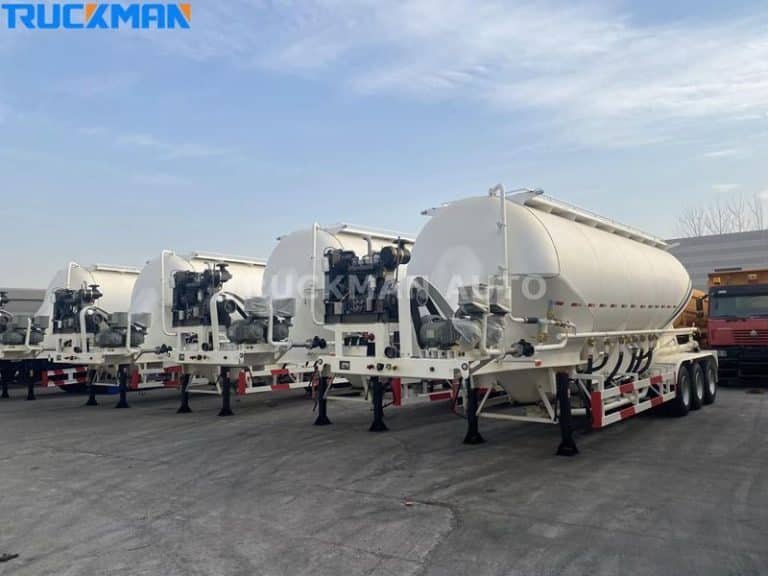
Pneumatic dry bulk tankers transport powdery materials including cement, lime, and flour using compressed air discharge, with capacity measured in cubic feet — typically 560 to 3,120 cu ft — rather than gallons, and unloading dependent on compressed air supply availability at the destination. The sealed enclosure prevents moisture ingress and product contamination during transport. Confirm air supply availability and pressure at the unloading site before specifying the discharge system configuration. It is commonly used in construction sites to transport bulk cement.
Asphalt special tanker
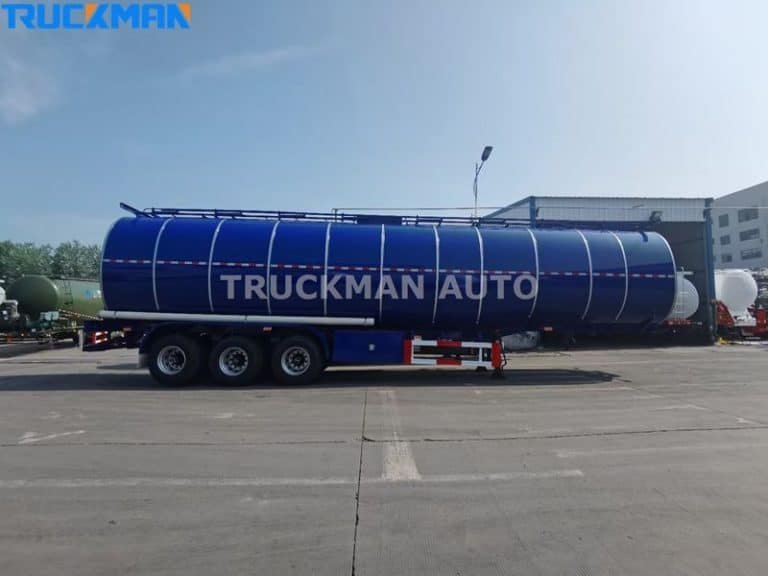
Asphalt tankers transport bitumen, liquid asphalt, asphalt binder, or asphalt emulsion at temperatures typically ranging from 150–180°C depending on the material grade and ambient conditions, requiring insulated double-wall construction and a heating system to prevent solidification during transit. The specific temperature requirement depends on the material grade and expected transit duration and should be confirmed before finalizing the heating system specification. The optimised tank structure is adapted to complex road conditions and is widely used for asphalt distribution on highway construction sites.
Gas Transport Semi-trailer
LPG, propane, butane, and anhydrous ammonia are transported in MC-331 pressure cargo tanks, built from carbon or alloy steel and tested to ASME pressure vessel standards — a fundamentally different engineering requirement from liquid tankers. Equipped with multiple safety valves and pressure control systems, it is commonly used for LPG distribution in residential areas to meet the needs of domestic and industrial/commercial gas consumption. LNG and other cryogenic liquids require cryogenic tank designs associated with MC-338 insulated cargo tank requirements, not standard MC-331 LPG tanker specifications. LPG and LNG must not be treated as interchangeable in the specification process.
Crude Oil Tanker
Crude oil tankers transport unrefined petroleum from extraction sites to processing facilities. The applicable DOT cargo tank specification depends on the crude grade — low-vapor-pressure crude is commonly transported in DOT-406 tanks, while high-vapor-pressure or sour crude may require DOT-407 specification. Tank specification, liner requirements, and vapor recovery configuration must be verified against the specific crude grade’s viscosity, sulfur content, and vapor pressure before ordering.
Water and Agricultural Tanker
Water tankers transport potable or non-potable water for construction site supply, dust suppression, agricultural irrigation, and emergency response, with tank material and fitting specification determined by whether the cargo is potable or non-potable. Construction is typically carbon steel or polyethylene for non-potable applications. Potable water versions use stainless steel or food-safe lined carbon steel; tank materials and coatings should be confirmed against NSF/ANSI 61 requirements for drinking water system components. Agricultural liquid tankers also carry fertilizer solutions and crop protection chemicals, which require chemical-compatible liners confirmed against the specific product formulation.
Vacuum Tanker
Vacuum tankers transport liquid waste, sludge, and industrial effluent using a built-in vacuum pump, eliminating the need for gravity feed or external pumping at the collection site. These trailers typically transport non-hazardous waste streams and do not fall under DOT hazardous materials cargo tank specifications — however, if the collected material contains regulated hazardous constituents, applicable hazmat transport rules must be verified for the specific cargo. The gas-tight construction prevents leakage and odor during transport. These tankers are used in municipal sewage work, industrial site cleaning, construction site waste management, and environmental remediation.
Design and capacity characteristics of tank trailers
Tanker trailer interior design — baffle, bulkhead, or smooth-bore — determines how liquid cargo behaves during transit and which cargo separation or cleaning requirements can be met, making it a specification variable that depends on both cargo type and operational pattern.
- Baffle Design: Reduces liquid shaking and improves driving stability through perforated bulkheads. Commonly used in fuel and chemical trailers to prevent liquid surge during transport.Baffles do not separate cargo between sections and are not a substitute for bulkheads when carrying multiple incompatible products.
- Bulkhead design: Separates the tank into multiple storage compartments to avoid cargo mixing. Ideal for food-grade and crude oil trailers where multiple liquids can be transported at the same time.Each compartment has its own outlet and valve system for independent loading and unloading.
- Smooth-bore design: Smooth interior without dividers for easy cleaning and sterilisation. Suitable for single bulk materials such as powdered cement, ensuring smooth unloading. Also used for single-product chemical or food-grade tankers where complete residue removal between loads is a compliance requirement.
- Stainless steel material: corrosion-resistant and conforms to food hygiene standards, prolonging service life. Widely used in food and chemical trailers to ensure cargo purity.
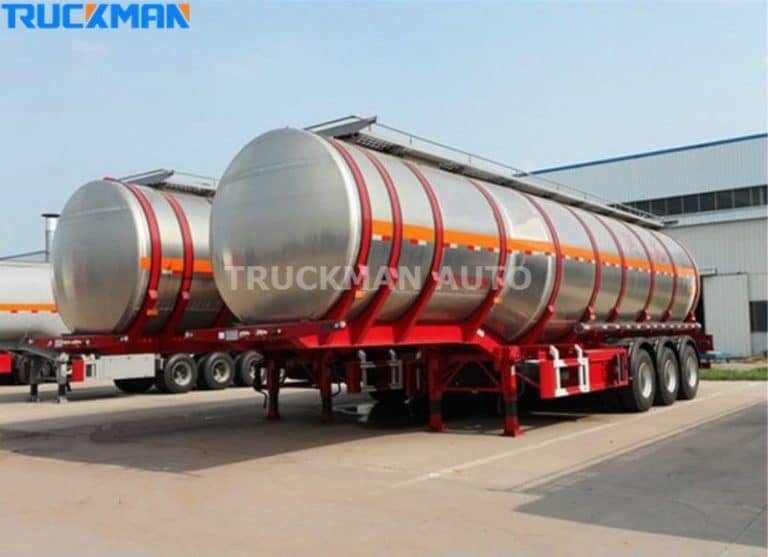
- Aluminium: Lightweight design improves load efficiency and fuel economy. Commonly used in fuel trailers to reduce transport costs.The structural and payload advantages of aluminum cargo tank construction become most significant on routes where gross weight limits are the binding constraint.
- Carbon Steel: Tough and pressure resistant, withstands high temperature and pressure conditions. Suitable for gas and asphalt trailers to ensure structural strength.
- Small Capacity Range: 1,000 to 3,000 gallon capacity for short-distance local distribution. Commonly used in mobile trailers for flexible service to job sites or disaster areas.
- Large Capacity Range: Capacities of 5,000 to 11,600 gallons for long-haul needs. Used in fuel and chemical trailers to support bulk transport.
- Dry Bulk Capacity Range: Capacities from 560 to 3,120 cubic feet designed for bulk materials. For powdered cement trailers to ensure efficient loading and unloading.
| Tanker Type | Common Cargo | Typical Material | Common Capacity | Applicable Specification |
|---|---|---|---|---|
| Fuel tanker | Gasoline, diesel, jet fuel | Aluminum | 3,000–11,000 gal | DOT-406 |
| Chemical tanker | Solvents, acids, corrosives | Stainless steel + liner | 3,000–7,000 gal | DOT-407 / DOT-412 |
| Food-grade tanker | Milk, juice, edible oil | Stainless steel | 3,000–6,000 gal | 21 CFR Part 1 Subpart O |
| Dry bulk tanker | Cement, lime, flour | Aluminum / carbon steel | 560–3,120 cu ft | Pneumatic discharge |
| LPG tanker | Propane, butane, ammonia | Carbon / alloy steel | Varies by gas weight | MC-331 |
| Cryogenic tanker | LNG, liquid nitrogen | Vacuum-insulated | Varies | MC-338-type design |
| Asphalt tanker | Bitumen, asphalt binder | Carbon steel | 3,000–8,000 gal | Insulated + heated |
| Vacuum tanker | Waste, sludge, effluent | Carbon steel | 2,000–6,000 gal | Non-hazmat (verify by cargo) |
How To Choosing Suitable Tanker Trailer ?
Selecting the right tanker trailer requires confirming five variables in order: cargo type and its applicable DOT cargo tank specification, required capacity against gross weight limits for the route, temperature and pressure requirements, loading and unloading infrastructure compatibility, and the regulatory framework of the operating jurisdiction.
Before ordering, confirm these inputs:
- Cargo name and Safety Data Sheet (SDS)
- Applicable DOT cargo tank specification or ADR equivalent
- Vapor pressure and corrosivity of the cargo
- Density and payload limit for the operating route
- Loading and unloading method and terminal interface requirements
- Temperature or insulation requirements
- Operating market and jurisdiction
Cargo type and DOT specification: Defining the cargo type and confirming its applicable DOT cargo tank specification is the first and non-negotiable step. Food trailers must comply with 21 CFR Part 1 Subpart O. Chemical and fuel trailers must follow the applicable DOT cargo tank specification. Operating a tank under the wrong specification is a regulatory violation. Choosing the right trailer can effectively prevent pollution and safety hazards.
Capacity: The capacity of a tank trailer determines transport capacity. Capacity ranges from 1,000 gallons to 11,600 gallons; dry bulk tankers are measured in cubic feet rather than gallons. Capacity must be matched to both the application’s volume requirement and the gross weight limit for the operating route — a larger tank does not always mean more usable payload.
Safety equipment:Emergency internal valves (EIVs) must close within 30 seconds of remote activation per 49 CFR 178.345-11. Pressure relief valves, overfill protection, and grounding systems are required on regulated cargo tanks.
Industry Suitability: Different industries have different needs for trailers. Agriculture typically chooses water tanks or small trailers; the construction industry requires powdered cement or asphalt trailers; and the energy industry relies on fuel and gas trailers. Choosing the more appropriate equipment for the industry helps to optimise transport efficiency.
Regulatory Requirements: The applicable regulatory framework — DOT for the US, ADR for international transport, or national equivalents in other markets — must be confirmed for each operating jurisdiction before manufacture. Export market requirements should be confirmed before ordering, not after delivery. Also, make sure the driver holds the required CDL with Tanker (N) endorsement, plus Hazardous Materials (H) endorsement for regulated cargo to avoid penalties. Applications that fall outside standard configurations — non-standard compartment layouts, specific valve or fitting requirements, or market-specific certifications — are addressed through our custom tanker trailer specification process.
Tanker Trailer Maintenance and Safety Precautions
Tanker trailers carrying regulated cargo must follow inspection intervals under 49 CFR Part 180 in the US. As a general baseline, many cargo tanks require annual external visual inspection and leakage testing, with internal visual inspection and pressure testing on a five-year interval. However, vacuum-loaded tanks, insulated tanks, lined tanks, corrosive service, and specific MC-331 configurations may require shorter or different intervals under 49 CFR 180.407. Additional inspections are also required after damage, repair, or non-use exceeding 12 months.
- Tank cleaning: Cleaning frequency depends on cargo type and applicable regulations. Food-grade tankers must comply with 21 CFR Part 1 Subpart O sanitary requirements between loads. Where cleaning generates wastewater discharge, EPA 40 CFR Part 442 effluent guidelines may apply to the wastewater management process. Chemical tankers require full residue removal between incompatible products. Petroleum tankers require periodic cleaning to remove sediment and water accumulation. A full breakdown of cleaning intervals, valve testing sequences, and component replacement thresholds is covered in ourtanker trailer inspection and servicing guide.
- Regular inspections: Under 49 CFR 180.407, the inspection schedule varies by tank type and service. Annual external visual inspection and leakage test apply to most tanks. Internal inspection and pressure test typically follow a five-year interval for standard configurations. Vacuum-loaded, insulated, and corrosive-service tanks may have shorter intervals. Operators outside the US should verify the equivalent schedule under the applicable local framework.
- Safety equipment maintenance: Safety system checks — emergency internal valves, pressure-vacuum vents, overfill interlocks, and grounding connections — must be functionally verified at each inspection interval. A valve that passes paper inspection but fails to close under load is not a compliant safety system. Check fire extinguishers for expiration dates.
- Work area safety: No matches, lighters or open flames are allowed in the work area. Electrical equipment needs explosion-proof certification. Static grounding must be connected before any product transfer begins.
- Standardise the use of tools: Use copper or alloy spanners when overhauling to avoid sparks. Ensure safe operation and reduce the risk of explosion.
- Driver training: Under FMCSA rules, operating a tanker above the threshold requires a CDL with Tanker (N) endorsement. Carrying regulated hazardous cargo requires an additional Hazardous Materials (H) endorsement.Initial hazmat training must be completed within 90 days of hire, with recurrent training every three years. Certification requirements are one part of a broader set of fuel tanker operating procedurescovering pre-trip inspection, loading sequences, and emergency response.
Conclude
Tanker trailer selection connects cargo classification, tank specification, material compatibility, and regulatory compliance into a single decision. The right type is determined first by the cargo’s applicable DOT cargo tank specification, then by capacity, temperature and pressure requirements, loading infrastructure compatibility, and the operating jurisdiction’s regulatory framework. From food-grade, chemical, and fuel tankers to crude oil, water, vacuum, dry bulk, asphalt, and pressurized gas configurations, each type has specific requirements that cannot be substituted.
To start the specification process, share three inputs with our team: the cargo type and its applicable DOT or ADR specification if known, the target operating market, and the loading and unloading infrastructure at your primary sites. We confirm the applicable specification and tank configuration before finalizing any order. For operators evaluating sourcing options and manufacturer criteria, our overview offuel tanker trailer procurement considerations covers what to verify before placing an order.
FAQ
What are the main types of tanker trailers?
The main types are fuel/petroleum tankers (DOT-406), chemical tankers (DOT-407 or DOT-412), food-grade tankers (21 CFR Part 1 Subpart O), asphalt tankers, crude oil tankers, water and agricultural tankers, vacuum tankers, pneumatic dry bulk tankers, and LPG/pressurized gas tankers (MC-331). Each type is built to a specific cargo tank specification — the cargo’s regulatory classification determines which specification applies.
What is the difference between DOT-406, DOT-407, and DOT-412?
DOT-406 covers low-pressure flammable liquids including gasoline and diesel at MAWP 2.65–4 psig, with aluminum construction. DOT-407 covers higher-pressure chemical liquids at MAWP at least 25 psig. DOT-412 covers corrosive materials at MAWP at least 5 psig with corrosion-resistant liners. Using the wrong specification for a given cargo is a regulatory violation.
Are baffles the same as bulkheads?
No. Baffles are perforated dividers that slow liquid movement but allow flow between sections — they reduce surge without separating cargoes. Bulkheads are solid dividers that create fully sealed compartments preventing any mixing. Fuel delivery tankers typically use both: bulkheads to separate fuel grades, and baffles within each compartment to control surge.
Can the same tanker carry different cargo types?
A multi-compartment fuel tanker can carry different petroleum products simultaneously in separate compartments. A chemical tanker may carry different compatible chemicals sequentially with cleaning between loads. Using a tanker for a cargo outside its applicable DOT specification, or incompatible with its material specification, is not permitted.
What tanker is used for LPG versus LNG?
LPG, propane, and butane are transported in MC-331 pressure cargo tanks. LNG requires MC-338-type cryogenic tank designs with vacuum insulation. These are different engineering requirements and must not be treated as interchangeable in the specification process.
How often should a tanker trailer be inspected?
Under 49 CFR 180.407, most cargo tanks require annual external visual inspection and leakage test, with internal inspection and pressure test on a five-year interval for standard configurations. Vacuum-loaded, insulated, corrosive-service, and MC-331 chlorine-service tanks may have different intervals. Operators outside the US should confirm equivalent requirements under the applicable local framework.