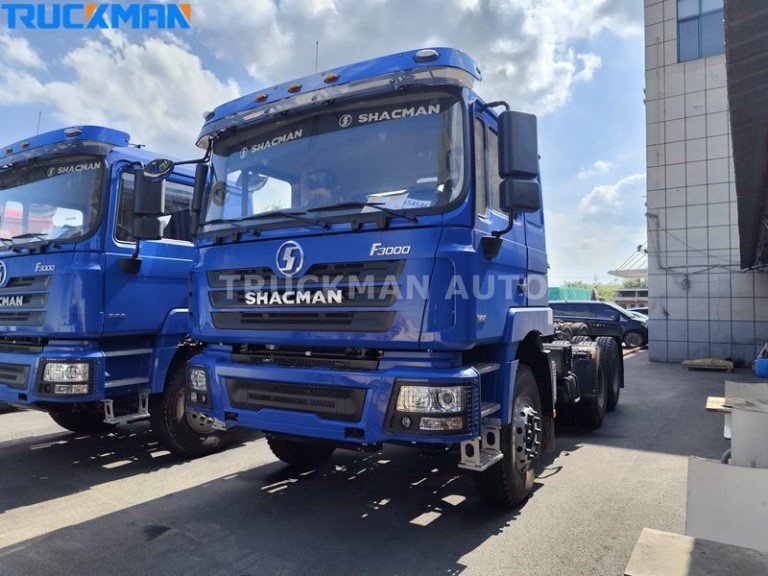
Making a reliable decision between Shacman and HOWO tractors requires comparing the delivered configuration against your duty cycle. Truck names and brochures rarely tell the full story. You need to specify exactly what fits your routes, loads, and service needs.
At Truckman Automobile, we specialize in customized Shacman tractor specifications for export. We also help procurement teams evaluate HOWO offers to ensure fair comparisons. This article explains how to align specifications, avoid selection mistakes, and verify the factors that drive uptime.
Configuration Alignment: Shacman vs HOWO
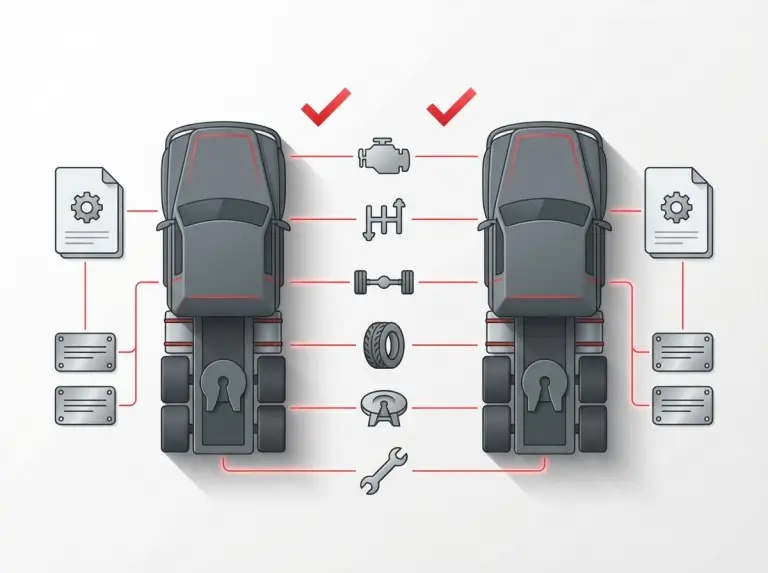
You can only validly compare tractors after aligning the configuration baseline. This controls performance, serviceability, and compliance. Tractors with similar model names often carry different engines, axles, and cabs. Treat every quotation as a build specification to match item-by-item.
Start by writing a “comparison scope” that lists your duty cycle and route profile. A long-haul tractor differs significantly from a construction truck. If a seller cannot confirm key items in writing, ask for the build sheet and nameplate evidence.
|
Item to align |
What to record |
Why the comparison changes |
How to verify |
|---|---|---|---|
|
Drive layout |
4×2 or 6×4, axle rating class |
Traction and tire wear depend on it |
Build sheet and axle nameplate |
|
Engine family |
Engine model series and rating |
Service parts vary by family |
Engine plate and build sheet |
|
Aftertreatment |
Presence and layout of hardware |
Affects maintenance access |
Visual inspection and docs |
|
Transmission |
Model, manual/automated, PTO |
Shift strategy differs |
Transmission plate and spec sheet |
|
Final drive setup |
Axle ratio and tire size pairing |
RPM and gradeability depend on it |
Build sheet and tire sidewall |
|
Chassis interfaces |
Fifth wheel rating, wheelbase |
Trailer fit depends on geometry |
Frame drawing and hardware check |
|
Support reality |
Warranty scope, service points |
Uptime risk depends on response |
Warranty terms and service map |
This alignment prevents misleading conclusions. It makes tender comparisons audit-friendly for fleet managers. Addressing this early makes price discussions meaningful because scope gaps become visible.
Further Reading: Shacman Tractor Truck Models
Common Selection Misconceptions
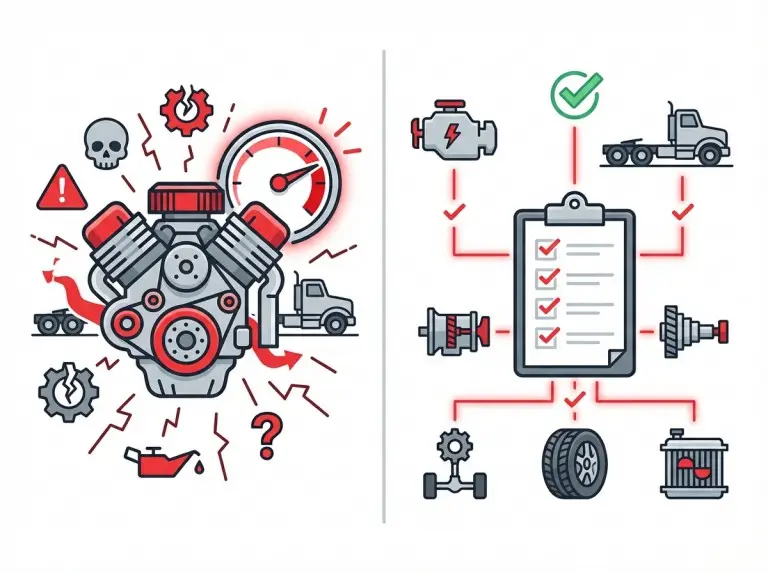
Expensive mistakes often happen when buyers ignore configuration drift. Optimizing for one headline spec often leads to mismatched gearing or limited parts access. Correct these misconceptions before you compare quotations.
Horsepower Selection: Gradeability and Fuel Risk
Do not choose based on horsepower alone. Gearing and duty cycle determine whether that power is usable. Offers may quote a broad rating range (290–420 hp), but the actual rating depends on the engine family. You must evaluate gradeability and fuel sensitivity through axle ratio, tire size, and weight.
Ask for the specific engine rating variant and driveline pairing, not just the peak number. Confirm cooling capacity for long grades or high temperatures. Without these details, performance comparisons are just guesses.
Model Name Assumptions: Configuration Drift
A model name does not guarantee identical content. Suppliers configure trucks for local fuel, parts, and regulations. The same badge might ship with different brakes, wiring, or cab trims. This changes service lead times and maintenance access.
Compare build sheets rather than marketing descriptions. Request a configuration list that includes the engine family, transmission, and axles. If the seller cannot provide this, the risk lies in the uncontrolled specification.
Price Comparisons: Warranty and Service Reality
Low upfront prices can lead to downtime if parts and warranty support are weak. Warranty language often excludes wear items or limits labor coverage. Service coverage depends on local partners, which you must verify before ordering.
Treat price as just one item in a risk review. Request written warranty scope and maintenance proof. If documents are unclear, assume higher operational risk.
Duty Cycle Trade-offs
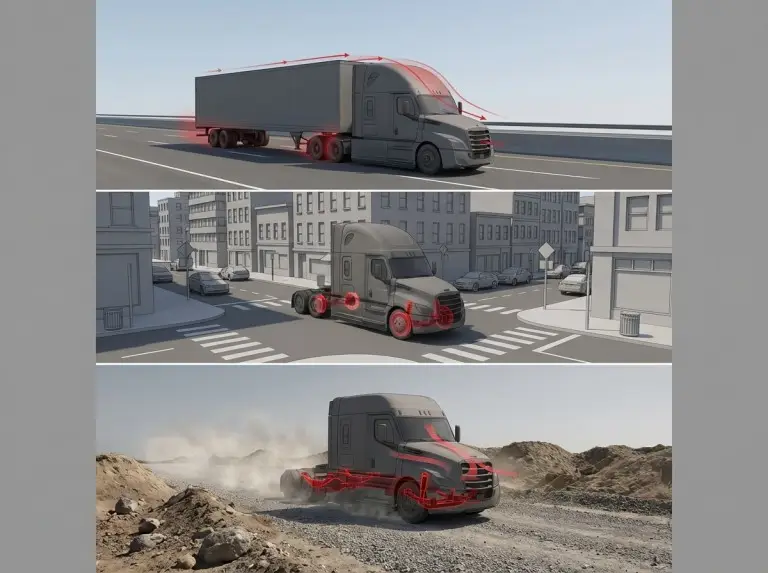
Decisions become clearer when you compare trade-offs by application rather than brand. Long-haul, distribution, and construction cycles stress different systems. Both brands can be configured to fit, but the buyer must confirm the spec matches the duty cycle.
|
Application |
What controls outcomes |
What to confirm in the offer |
What to test or inspect |
|---|---|---|---|
|
Long-haul linehaul |
Cruise stability, fatigue control |
Axle ratio, tire pairing, braking |
Road feel on a loaded test route |
|
Regional distribution |
Start-stop durability, brake wear |
Transmission strategy, cooling |
Low-speed maneuvering |
|
Construction |
Frame protection, traction |
Drive layout, chassis protection |
Clearance and access points |
Long-haul operations need stable high-speed behavior. Regional operations need thermal control for stop-start use. Construction operations need traction and rough-road protection.
Verify these trade-offs first. Document the trailer match, as fifth wheel height and wheelbase influence handling. If the trailer type is unknown, mark variables as “dependent” until defined.
Powertrain Variables
Verify powertrain variables to control grade behavior, fuel sensitivity, and repairs. Engine family, transmission model, and axle ratio are not interchangeable even if peak outputs look similar. Base procurement decisions on plates and build sheets.
Engine Family: Cooling and Aftertreatment
Treat engine selection as a service decision. Confirm the engine family, rating variant, and aftertreatment layout. Validate fuel quality assumptions and local service capability. These factors influence maintenance burden and downtime.
Discuss cooling margins based on your route profile, not generic claims. Ask what cooling package is installed. If the seller cannot reference a comparable setup, plan for additional inspection.
Transmission Type: Shift Strategy and PTO
Select a transmission that matches driver skill and maintenance capacity. Manual and automated variants affect clutch wear and repair complexity. Confirm the specific model, shift strategy, and PTO requirements.
Check how the transmission pairs with the engine rating and axle ratio. Mismatched gearing causes poor launch behavior and inefficient cruising. If the offer lacks details, treat performance claims as unverified.
Axle Ratio Alignment: Tires and Duty Cycle
Axle ratio and tire size determine cruise rpm and grade response. This directly affects fuel sensitivity. Confirm the axle ratio and tire specification to see if it fits long-haul or stop-start work.
Request the build sheet to verify this alignment. Check axle and tire markings. If the truck is built-to-order, attach the specification list to the contract.
Chassis Inspection
Uptime depends heavily on chassis interfaces, braking components, and cab details. Failures often stem from mismatched load assumptions. Treat these systems as inspection items rather than marketing features.
Frame Checks: Suspension and Load Capacity
Frame suitability depends on the real load envelope. Confirm axle classes and suspension types. Map them to expected duty cycle stress. Prioritize protection and mounting integrity for rough roads.
Inspect mounting points, clearance, and service access. Verify that chassis interfaces support your trailer. If the trailer type is uncertain, delay wheelbase selection.
Braking Confirmation: ABS and Stability
Confirm safety features rather than assuming them. ABS integration varies by configuration and region. Validate stability features in the build sheet.
Confirm the brake hardware type and service parts pathway. Brake wear depends on the duty cycle. Ensure the truck is maintainable locally with predictable lead times.
Cab Ergonomics: Fatigue Control Features
Cab selection affects driver retention and safety. Confirm seat type, HVAC, and storage layout. A cab that looks similar externally can differ meaningfully inside.
Inspect the driving position, mirror coverage, and controls. Evaluate sleep features for long-haul duties. Prioritize practical comfort features for mixed duty cycles.
Total Cost Checklist
Total cost differences depend on downtime and serviceability. Fuel, maintenance, and repair cycles vary with the route and driver. Manage these variables with a verification checklist.
|
Evidence to request |
What it prevents |
What “good” looks like |
|---|---|---|
|
Written warranty scope |
Disputes about coverage |
Clear coverage and claim pathway |
|
Parts ordering pathway |
Downtime due to missing parts |
Named channel and escalation contact |
|
Preventive maintenance plan |
Missed intervals |
Guidance tied to duty cycle |
|
Service coverage description |
Unplanned recovery costs |
Defined service points or partner plan |
|
Delivery inspection checklist |
Hidden configuration drift |
Signed checklist with photos |
Build a total-cost model around risk categories. These include fuel sensitivity, preventive maintenance, parts lead time, and repair complexity. If a category is uncertain, plan to verify it.
At Truckman Automobile, we use this checklist to configure Shacman tractors. We use the same logic for HOWO comparisons. This clarifies the risk profile for procurement.Use it to confirm the Shacman tractor truck price is justified by uptime, parts access, and service coverage.
Conclusion
Truckman Automobile as a dedicated Shacman truck dealer, we believe a defensible decision requires verifying configuration alignment before discussing price. Compare matched baselines and validate the driveline pairing. Ignoring these steps turns comparisons into untestable opinions.
Choose the tractor that matches your constraints and offers the strongest evidence pack for serviceability. If evidence is missing, treat it as a risk. This keeps procurement aligned with uptime goals.
Further Reading: shacman tractor truck dimensions
FAQ
How to compare tractor offers fairly?
Match configuration baselines for engine family, transmission model, axle ratio, and tire size. Align duty cycle assumptions like route profile. Label unknown items as “conditional” until verification is complete.
Is horsepower the main decision factor?
No. Axle ratio and tire pairing control usable performance on grades. Confirm the driveline pairing and gross combination conditions first. If the offer lacks these details, request the build sheet.
Why do model names differ by market?
Suppliers configure trucks for local requirements and parts channels. This causes differences in engines, brakes, and wiring. Rely on build sheets rather than badges to avoid configuration drift.
What to verify on the build sheet?
Verify the engine family, transmission model, axle ratio, tires, and fifth wheel interface. Confirm that safety and telematics items are documented. Treat undocumented claims as unverified.
How to reduce downtime risk?
Confirm parts ordering pathways and warranty steps before purchase. Document preventive maintenance assumptions that match your duty cycle. Plan a spare-parts strategy if local support is limited.