Troubleshooting a SHACMAN tractor depends on its model, fuel type, and custom setup. A complaint on one truck might need a different check order than another. This is because wiring, accessory loads, air system routing, and engine configuration can all vary. We clarify these variables first to ensure the diagnosis path matches the specific truck.
SHACMAN fault symptoms can look similar across different systems, like the engine, brakes, or transmission. However, the service boundary isn’t the same for every issue. Some checks are fine for a roadside inspection. Others, like sensor or internal mechanical faults, need a trained service technician. We align the troubleshooting path with tool access, operating conditions, and safety before making any repair decision.
This guide focuses on symptom diagnosis and service handoff logic, not full disassembly procedures. You should always verify model-specific repair steps and adjustment values with the correct service documents for your truck’s configuration. We keep the focus on symptom entry, first checks, and handoff criteria to prevent scope drift.
Troubleshooting Mistakes and Wrong First Checks
Accurate SHACMAN fault diagnosis often depends on the order of your first checks, not the speed of part replacement. Repeated downtime often starts when teams skip simple inspections of connectors, hoses, air lines, or fuses. We correct that habit early because a wrong first move can hide the real cause.
A common mistake is replacing a component before confirming the full failure chain. A warning lamp or weak performance can stem from wiring resistance, an air leak, a blocked filter, or a bad ground. It’s not always the main component itself. We compare symptom evidence with simple checks first. We only move to deeper inspection if this first layer doesn’t explain the symptom.
Another mistake is assuming all power loss is due to internal engine failure. Power loss under load can result from a blocked air intake, a leak in the turbo path, or unstable fuel delivery. The next step depends on smoke, strange sounds, and dashboard warnings. We verify the complete symptom pattern before escalating the issue to a workshop.
Fault Severity Triage and Service Decisions
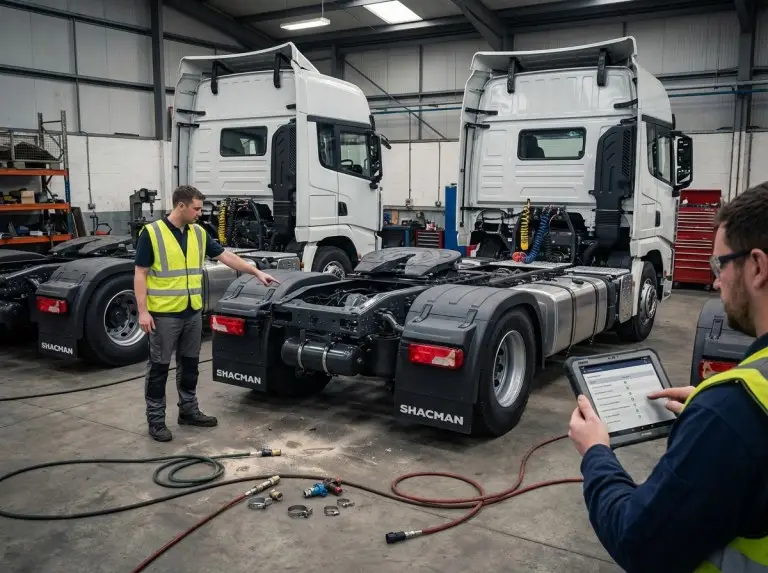
Triaging a SHACMAN tractor fault for continued operation depends on warning lights, brake response, and power behavior. A correct triage decision lowers safety risks and prevents more damage during diagnosis. We decide on the service boundary before starting any detailed troubleshooting.
The first question isn’t “which part failed,” but “can the truck be inspected safely?” Changes in brake performance, oil pressure warnings, severe abnormal noise, or overheating may require an immediate stop. We verify safety conditions first. A correct diagnosis has little value if the truck is unsafe to operate.

Use this field triage frame before checking subsystems:
- Stop operation and request service if braking, steering, or critical warnings show an active safety risk.
- Move with caution only if the symptom is stable, the truck is controllable, and a basic inspection shows no active leaks or severe warnings.
- Continue troubleshooting on-site when the fault seems non-critical and you can perform inspections safely with available tools.
- Hand off to a workshop when the symptom needs special diagnostics, internal disassembly, or repeated fault-code checks.
Symptom-Based Troubleshooting Paths
Efficient troubleshooting for SHACMAN trucks depends on starting with the dominant symptom cluster. Drivers often report several changes at once. The check order becomes clearer when you start with the most obvious issue, such as starting behavior, brake air pressure, or shifting problems. We compare symptom clusters to decide the first-check sequence before any major disassembly.
Decisions also depend on whether the fault can be repeated and if a basic inspection shows a visible cause. A symptom entry map helps teams avoid random checks. However, you should still verify final repair decisions with configuration-specific documents. We use the branches below as a structured first-pass workflow.
Engine Starting Symptoms and Hard-Start Conditions
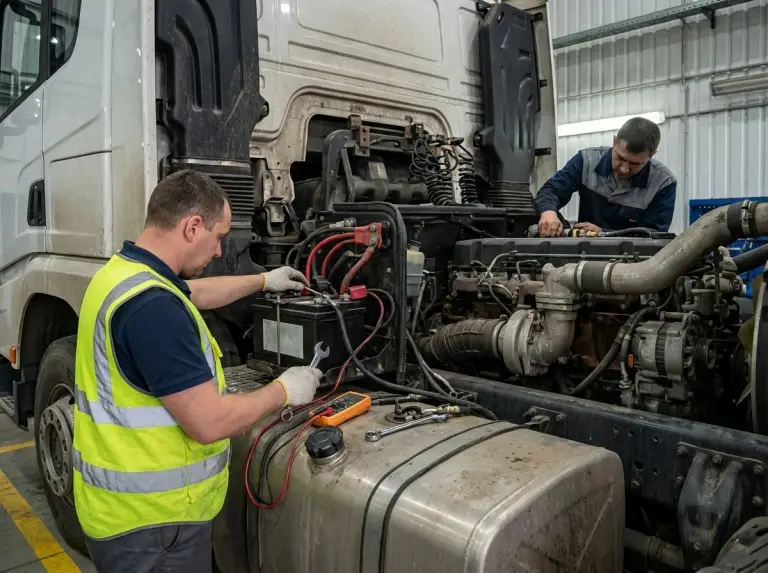
Checking engine starting faults in the field depends on battery condition, connections, and fuel delivery. A no-start complaint can have different causes. The truck might not crank, crank weakly, or crank normally without firing. We clarify the starting symptom type first because each pattern points to a different next step.
Battery terminals, cable tightness, and ground condition are good first checks. Poor electrical contact can mimic deeper faults. A blocked fuel line or air in the fuel path can also prevent the engine from firing, even with a normal crank. We verify basic electrical and fuel path conditions before checking sensors or the injection system.
Cold-weather starting issues need an extra check. Low temperatures change fuel behavior and battery response. The right action depends on the fuel grade and battery performance in the cold. You should verify exact procedures for your truck’s configuration. We confirm weather-related variables before assuming a major engine fault.
Power Loss Under Load and Combustion-Related Symptoms
Troubleshooting power loss under load depends on air intake flow, turbocharger path integrity, and fuel quality. A truck that feels weak on a hill does not automatically mean internal engine damage. We compare load condition, smoke color, and sound changes to narrow down the first checks.
A restricted air filter or blocked intake path reduces combustion air and can cause weak throttle response. A turbo hose leak or loose clamps can also change boost delivery and drivability. We verify the intake and boost path condition before assuming it is an injection-system fault.
Contaminated or unstable fuel can cause rough engine response, smoke, and weak acceleration. The correct next step depends on filter condition and water separation status. It also matters if the symptom started after refueling. We align the inspection with the fuel history to avoid confusion.
Air Brake Pressure Leak and Low Build-Up Symptoms
Troubleshooting air brake pressure leaks depends on the leak’s location, compressor behavior, and moisture levels. Brake system symptoms require a higher service boundary because they can affect stopping performance. We decide on inspection depth based on braking safety first, then isolate the cause.
Visible air line damage, fitting leaks, and valve-area leaks are common places to check first when pressure drops. Accessible checks can confirm leakage, but you should verify pressure-drop limits and recovery criteria with vehicle documents. We confirm leak evidence before replacing compressor-related components.
Low pressure build-up also requires checking the compressor and air treatment system. Moisture, a valve malfunction, or drive issues can change system behavior. The correct repair boundary depends on compressor cycling and moisture signs. We hand off brake-system faults to service support when stable recovery cannot be confirmed.
Transmission Shifting Resistance and Clutch Slip Symptoms
Troubleshooting shifting resistance depends on clutch free play, transmission fluid condition, and when the symptom occurs. Hard shifting and clutch slip may be reported together. The diagnosis path changes if the issue appears during engagement, acceleration, or after warm-up. We clarify the driving condition that reproduces the complaint before making adjustments.
Clutch free play outside the normal range can affect disengagement and cause gear grinding. The correct adjustment method should be verified in the service guide for the truck’s configuration. We check the adjustment first because an incorrect setting can mimic component wear.
Clutch slip under load requires a stricter service boundary, as continued operation can cause damage. If adjustments don’t fix the symptom, the next step is usually a workshop inspection. We prevent secondary damage by separating adjustment issues from wear-related faults early.
Electrical Lighting Faults and Dashboard Warning Symptoms
Troubleshooting electrical faults depends on fuse condition, ground integrity, and connector corrosion. Electrical issues may look simple, but intermittent faults often come from bad grounds or connections, not the visible device. We compare the pattern across lights and warnings before changing parts.
Fuse and bulb checks are reasonable first steps for an isolated lighting fault. Ground points and connector condition are more important when a fault is intermittent or affects multiple circuits. We verify the power supply and grounding before blaming a module or sensor.
Dashboard warning indicators should be read with context. A warning may reflect a sensor issue, a real system problem, or a wiring fault. The next action depends on fault-code access and operating behavior. We align dashboard information with physical inspection findings before making a decision.
Fuel Supply Contamination and Filter-Related Symptoms
Troubleshooting fuel system contamination depends on filter condition, air in the fuel path, and fuel source history. Rough idle, hard starts, and weak acceleration can overlap with air intake symptoms, so diagnosis order matters. We compare refueling timing and filter service history before assuming deeper fuel-system issues.
Primary and secondary filter condition can affect fuel delivery. Trapped air after service can also create starting or running complaints. The bleeding sequence should be verified against the fuel system layout, as it can differ by configuration. We verify proper service completion before treating the symptom as an injection-side fault.
Injection-side faults require a higher service boundary. Diagnosis and repair often need specialized tools. Fuel pressure checks can support the handoff decision, but internal pump repair should be handled by qualified technicians. We move beyond roadside checks at the right time to prevent avoidable damage.
Fault Verification and Post-Fix Acceptance Checks
Post-fix fault verification depends on checking under repeat conditions and checking warning status. A truck that restarts once is not automatically ready for duty. We verify a fix by confirming the original SHACMAN symptom pattern is gone under the same operating conditions.
Post-fix verification should match the original complaint scenario when it’s safe to do so. A power-loss complaint should be checked under a comparable load. An intermittent electrical fault should be checked after considering vibration or moisture triggers. We compare pre-fix and post-fix behavior to tie the result to the reported symptom.
Useful fault closure records state the symptom, what was checked, and what remains open for later service. Clear documentation prevents recurring confusion. We document verified findings and remaining service items to provide a clear picture.
Preventive Maintenance Linked to Recurring Fault Patterns
Preventive shacman tractor maintenance is more valuable when tasks are linked to symptom history, not just a fixed routine. A generic checklist is less useful if repeat faults keep happening in the same system. We align preventive actions with the fault patterns seen most often in operation.
A preventive routine improves when each task points to a likely failure pattern. Air system drainage relates to brake pressure stability. Filter service relates to fuel delivery. Connector inspection relates to intermittent electrical faults. We clarify these links so maintenance teams can prioritize actions that reduce repeat downtime.
Use a short preventive record format that helps later diagnosis:
- We record the symptom type and operating condition.
- We record what was inspected and replaced to avoid guesswork.
- We record whether the fault was verified as closed under repeat conditions.
- We record what remains as an item for the next workshop visit.
Seasonal changes should also shift preventive focus. Temperature and humidity affect starting, fuel flow, and air system moisture. Task frequency depends on duty cycle, climate, and maintenance policy. We use operating conditions as the main planning variable.
Conclusion
Planning the next troubleshooting step for customized SHACMAN fleets depends on symptom evidence and service boundary definitions. Reliable progress comes from correct triage and clean evidence, not just fast part replacement. We recommend using the sequence in this article each time a fault appears to isolate causes efficiently.
At Truckman Automobile, a China-based truck dealer, our support process starts with scope confirmation and risk clarification. The next step depends on the truck’s model, configuration, and what has already been checked. We keep these inputs clear so field and workshop teams work from the same fault picture.
For a practical next step, please share the truck model, symptom description, and recent maintenance actions. If you can, send photos or short videos of warning displays or leak areas. Visual evidence improves handoff quality. We can then help clarify the troubleshooting path and prepare the right information for support.
FAQ
Why does a SHACMAN tractor show the same problem after a part replacement?
A repeated SHACMAN symptom after a part replacement usually means the original fault chain was not fully verified. The cause may still be in the wiring, grounding, or an air leak. We verify the original complaint scenario again before replacing another part.
Can roadside checks solve most SHACMAN starting and power loss problems?
Roadside checks can isolate some starting and power loss causes. However, the repair boundary depends on the fuel system, warning status, and tool availability. We decide on a workshop handoff early when the truck shows repeated warnings or needs tools beyond what’s available in the field.
How should teams decide if a brake air pressure problem is a field issue?
Brake air pressure complaints should be treated as a service-boundary decision first due to safety risks. Field inspection can confirm visible leaks, but pressure behavior should be verified against vehicle documents. We use stable braking response as a key decision factor to prevent unsafe operation.
Are SHACMAN dashboard warning lights enough to identify the failed component?
Dashboard warning lights alone are not enough to confirm a failed component. Correct interpretation depends on fault codes and physical inspection results. We align dashboard information with inspection evidence before deciding on part replacement.
How often should SHACMAN filters and other checks be performed?
Maintenance intervals for filters, air systems, and electrical inspections depend on duty cycle, climate, and fleet policy. A fixed interval might not work for all operations. The schedule should be verified with service documents and actual fault history. We compare symptom records with maintenance timing to improve the plan.