
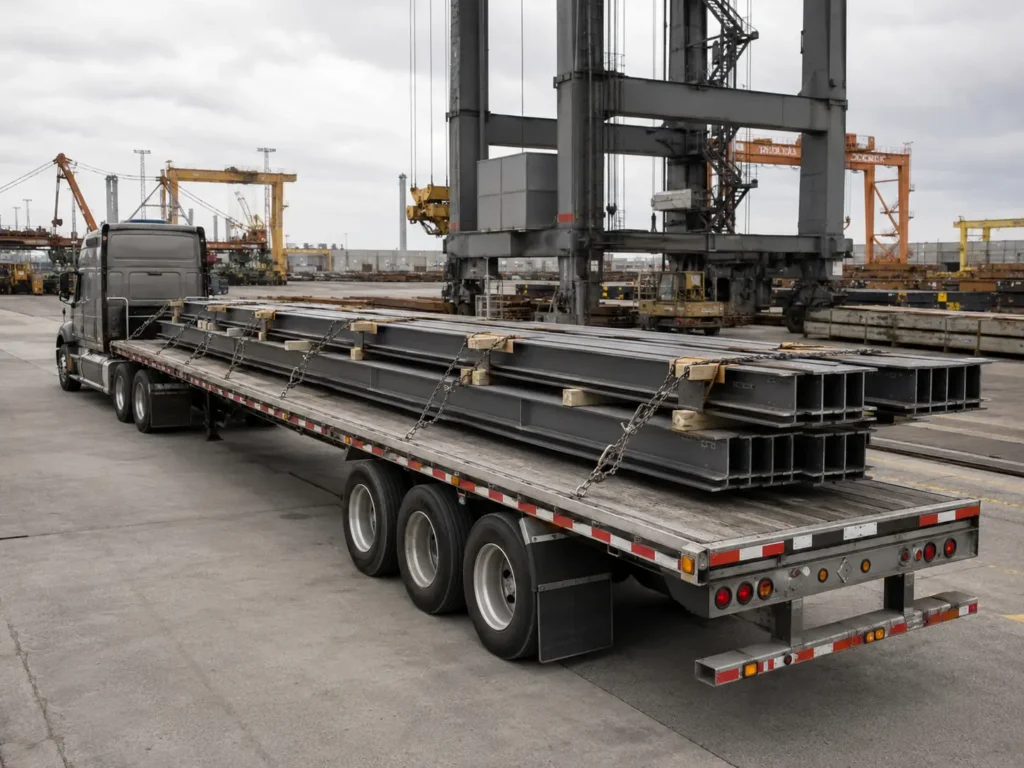
A flatbed trailer and a utility trailer differ in three ways: structural design (open deck with or without side rails), payload capacity (light-duty household range vs. commercial freight range), and loading method (ramp-loaded vs. crane or forklift). For buyers evaluating commercial freight equipment, the critical decision is not between these two consumer-side categories — it is recognising when the job requires a commercial flatbed semi-trailer entirely.
Getting the specification wrong takes two forms: over-purchasing by selecting a commercial semi-trailer for cargo a gooseneck equipment trailer handles at lower cost, or under-specifying and failing a weigh station inspection because the trailer’s axle rating was never confirmed against the actual loaded weight.
What Is a Utility Trailer
A utility trailer is an open-deck, non-motorized towing vehicle designed for general-purpose cargo hauling when payload exceeds what a standard vehicle bed can carry. Three structural features are consistent across the category: a welded steel or aluminum frame, a wood-plank or steel-mesh deck, and side rails or low side panels that serve as both cargo containment and tie-down attachment points.
“Utility trailer” is not a single engineering specification — it describes a broad family that includes landscape trailers, ATV trailers, pipe-top utility trailers, tandem-axle equipment trailers, and gooseneck variants. Light-duty single-axle models typically fall in the 2,000–5,000 lb GVWR range. Heavy-duty tandem-axle landscape and equipment trailers can reach 14,000–17,000 lb GVWR or higher.
GVWR is not payload. GVWR is the maximum combined weight of the trailer plus cargo as rated by the manufacturer on the certification label. Payload is what the trailer can actually carry — calculated by subtracting the trailer’s empty weight, ramps, toolboxes, and installed accessories from the GVWR. A trailer rated at 7,000 lb GVWR with an 800 lb empty weight delivers approximately 6,200 lbs of usable cargo capacity. Always calculate payload from the GVWR label; never use GVWR as a proxy for payload.
Loading a utility trailer is almost always done via a rear ramp gate — a fold-down steel ramp or mesh tailgate that doubles as a loading surface. This limits practical cargo to items that can be driven, rolled, or walked onto the trailer.
What Is a Flatbed Trailers
In consumer and light-commercial markets, a flatbed trailer is a subcategory of utility trailer — sharing the same hitch type and GVWR range, with one structural difference: no side rails. The absent side rails create a fully unobstructed deck, which makes loading wide items, side-positioning cargo, or working with a small forklift easier. That same absence removes the cargo containment utility trailers provide for loose or granular loads.
In commercial freight, a flatbed semi-trailer is an entirely separate category operating at a scale that consumer-grade trailers cannot match — length, width, deck height, and axle spacing are detailed in semi flatbed trailer dimensions. Under U.S. federal regulations, a five-axle tractor-semitrailer combination is generally limited to 80,000 lb gross vehicle weight. Practical cargo payload after subtracting tractor and trailer weight typically runs 40,000–48,000 lbs. Multi-axle configurations carrying oversize loads require state-specific permits, route pre-approval, and escort vehicles where applicable. These figures reflect U.S. standards under FHWA regulations — legal dimensions, axle limits, and permit thresholds vary by country and jurisdiction.
The loading method is what makes these two categories structurally incompatible. A commercial flatbed semi-trailer is designed for crane loading, overhead hoists, and side-lift forklifts — the fully clear deck with full-length stake pockets and chain-tie anchor points is built around that loading profile. A utility trailer, regardless of its GVWR, cannot be crane-loaded effectively. For any cargo that requires overhead or side lifting, no utility trailer configuration provides a viable alternative.
Between Utility and Semi-Trailer
Between the light-duty utility trailer and the commercial flatbed semi-trailer sits a range of intermediate types — each defined by its GVWR ceiling and the loading profile it supports. Treating the choice as binary is the most common planning error in trailer specification, and it typically results in either a costly over-specification or an equipment failure at the loading site.
| Trailer Type | Typical GVWR | Primary Selection Criterion |
|---|---|---|
| Light utility trailer | 2,000–5,000 lbs | Ramp-loaded, light equipment and household cargo |
| Tandem utility / landscape trailer | 5,000–10,000 lbs | Riding tractors, building supplies, heavier equipment |
| Heavy-duty equipment trailer | 10,000–17,000 lbs | Skid steers, compact excavators, pallet loads |
| Gooseneck / hotshot flatbed | 17,000–30,000 lbs | Long steel, heavy machinery, farm equipment |
| Commercial flatbed semi-trailer | 40,000–48,000 lbs payload | Side/top-loaded cargo, structural materials, oversized freight |
| Step deck / lowboy / RGN | Varies | Tall or high center-of-gravity equipment — step deck vs flatbed |
GVWR ranges are approximate and depend on trailer construction, axle rating (GAWR), and jurisdiction. A load in the 10,000–17,000 lb range does not automatically require a commercial semi-trailer — a heavy-duty equipment trailer or gooseneck flatbed is often the correct and more cost-effective specification. Full operating profiles and specifications across all open-deck configurations are covered in types of flatbed trailers.
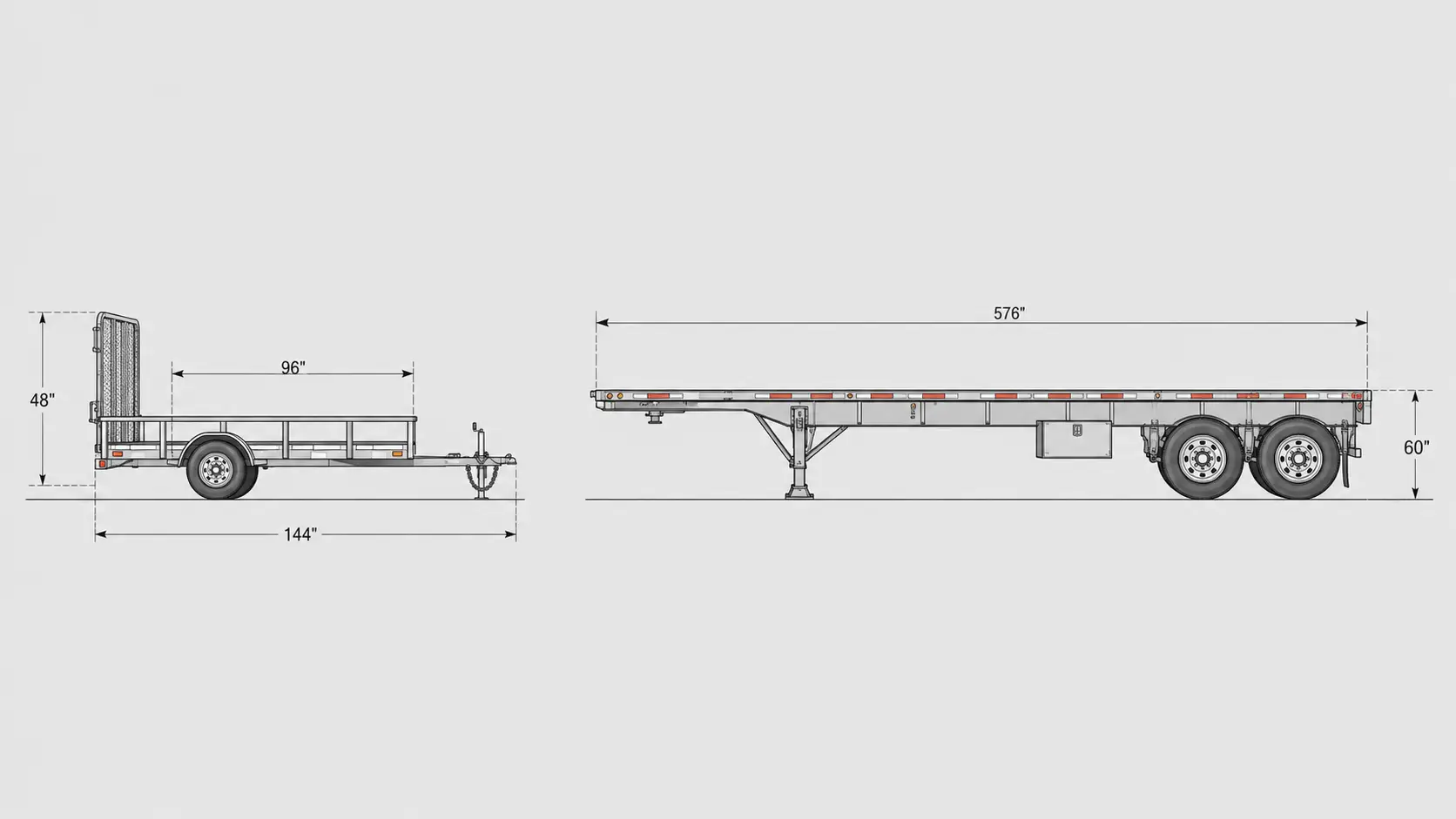
Cargo Geometry and Loading Method
Cargo geometry and loading method create selection constraints that payload capacity alone cannot resolve, particularly when cargo dimensions exceed standard deck width or when the available loading equipment at the facility is limited to cranes and forklifts. Knowing the GVWR ceiling answers one question; knowing whether this specific load can physically reach the deck answers another.
Cargo geometry creates hard limits that weight does not. Oversized items — structural steel girders, wide industrial panels — cannot be loaded onto a utility trailer regardless of their weight. Commercial flatbed semi-trailers can carry cargo that overhangs the deck on both sides within legally permitted limits. What qualifies as oversize and how the permit process applies is covered in flatbed trailer oversized loads.
The most common mismatch in trailer specification is not a weight exceedance. It occurs when the loading facility has no ramp access and the only available option is a side-lift forklift or overhead crane — a condition that eliminates every ramp-dependent trailer regardless of payload rating. This is a site infrastructure question, not a trailer specification question, and it must be confirmed before any equipment decision is made. Safe loading procedures across different facility configurations are detailed in loading a flatbed semi trailer.
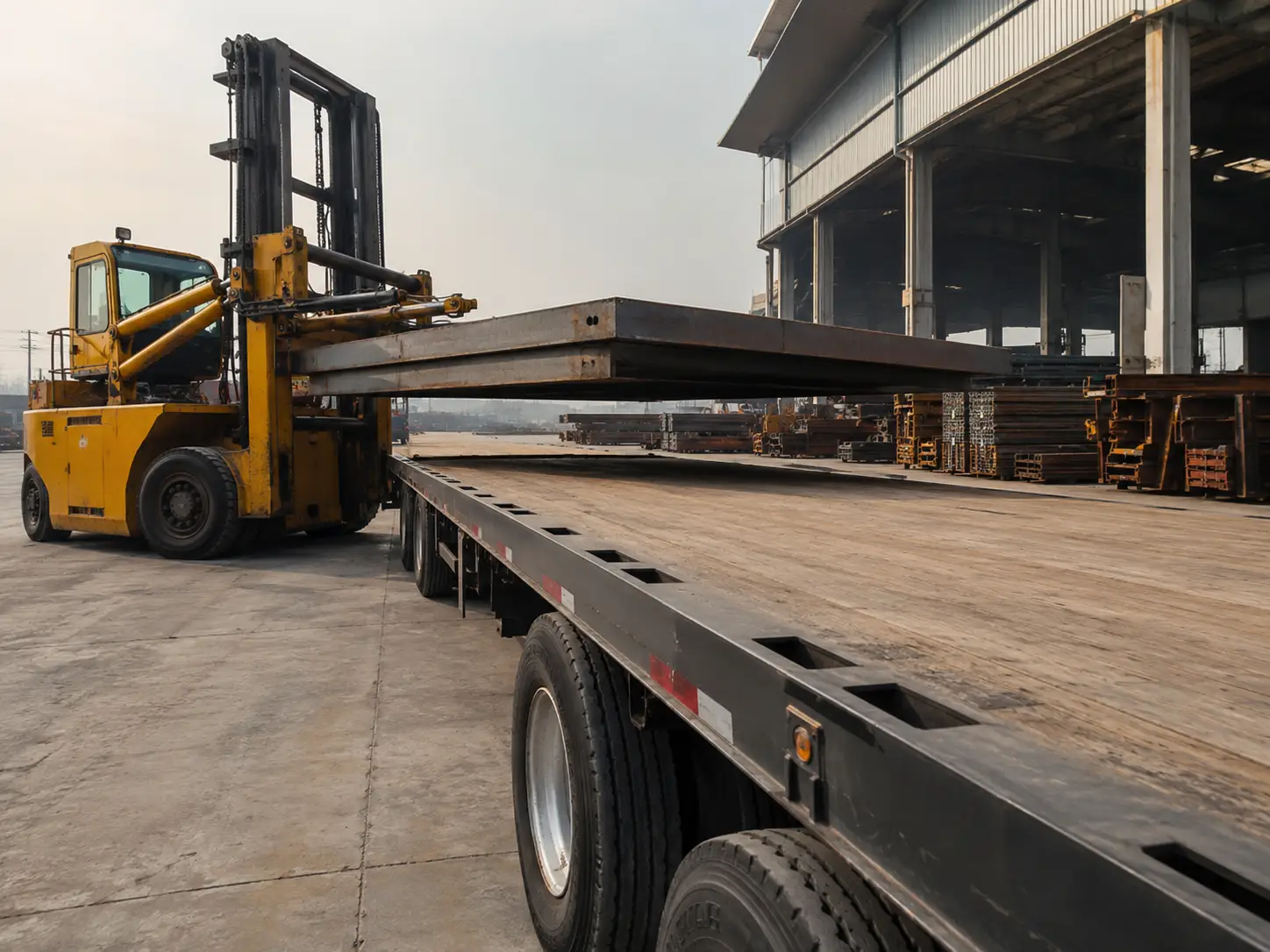
For cargo in the 10,000–40,000 lb range that can be ramp-loaded or driven on, a gooseneck flatbed or heavy-duty equipment trailer is often the right specification — and a lower-cost operation. The commercial semi-trailer becomes necessary when weight, cargo dimensions, loading method, and freight securement requirements together exceed what bumper-pull or gooseneck equipment trailers can safely and legally support.
Regulatory Checks Before Committing to a Trailer Type
Trailer selection involves regulatory variables that must be confirmed against the specific vehicle, route, and cargo — not estimated from general guidelines.
- GVWR, GAWR, and GCWR: Each trailer carries a GVWR and per-axle GAWR. The vehicle-trailer combination carries a GCWR (gross combined weight rating). All three must be checked independently. The GCWR of the combination can be a binding constraint even when both the tow vehicle and trailer are individually within their rated limits.
- CDL requirement (U.S.): Under FMCSA rules, a combination vehicle with a GCWR of 26,001 lbs or more generally requires a Class A CDL. A trailer with a GVWR exceeding 10,000 lbs does not independently trigger a CDL if the GCWR stays below 26,001 lbs. Heavy-duty equipment trailers paired with large pickup trucks frequently push the combination above this threshold when loaded — verify the GCWR of the specific combination before operating commercially.
- Cargo securement (49 CFR Part 393): Under FMCSA regulations, all commercial vehicle cargo must be secured to prevent shifting, rolling, or falling. For commercial flatbed loads, this requires verified tie-down working load limits (WLL), a minimum tiedown count that varies by cargo length and category under 49 CFR §393.110, and category-specific rules for machinery and rolling stock under §393.130. Field-level guidance on meeting these requirements is available in cargo securement on flatbed trailers.
- Width, height, and length (FHWA): Cargo exceeding 8.5 feet wide, 13.5 feet in combined height, or standard length limits requires an oversize permit. Permit conditions — travel hours, escort requirements, approved routes — are set by each state DOT and must be verified per route. Operations outside the U.S. require separate verification against applicable national and regional regulations.
Conclusion
The flatbed trailer vs. utility trailer decision converges on three variables: actual payload capacity after accounting for GVWR and trailer empty weight, the cargo’s dimensional profile, and the loading method available at origin and destination. For loads under 10,000 lbs that can be ramp-loaded, the right answer is usually in the utility or equipment trailer family. For commercial freight requiring crane or forklift loading, oversized dimensions, or payloads above 40,000 lbs, a commercial flatbed semi-trailer is the correct specification.
The loading method is the variable that most often gets confirmed last and causes the most expensive mismatches. A buyer selects a trailer based on the payload number, confirms it clears the weight requirement, and then discovers at the loading site that the cargo cannot be ramp-loaded. Confirming the loading method at both the origin and the destination — before any other specification decision is made — prevents this failure mode.
If you are at the early stage of matching equipment to a freight requirement, how to choose the right flatbed semi trailer walks through the key specification variables step by step. For cargo profiles involving payloads above 20 metric tons, side or top loading requirements, oversized dimensions, or multi-jurisdiction routes with varying axle regulations, contact us with your cargo specifications and route details. We can identify the axle configuration, deck length, and tie-down system that matches your freight and operating requirements.
FAQ
Is a flatbed trailer the same as a utility trailer?
In light-duty consumer markets, a flatbed is a subcategory of utility trailer — an open-deck trailer without side rails, sharing the same GVWR range and hitch type. In commercial freight, a flatbed semi-trailer is a distinct category with different dimensions, tractor requirements, payload ratings, and regulatory obligations. The two are not interchangeable.
What is the difference between GVWR and payload?
GVWR is the maximum total weight of the loaded trailer as rated by the manufacturer — including the trailer’s empty weight. Payload is GVWR minus the trailer’s empty weight and all installed equipment. A 7,000 lb GVWR trailer with an 800 lb empty weight carries approximately 6,200 lbs of cargo. Always calculate payload from the GVWR label; never treat GVWR as available cargo capacity.
Do I need a CDL to tow a utility trailer?
Under U.S. FMCSA rules, a CDL is generally required when the GCWR of the vehicle-trailer combination reaches 26,001 lbs or more. Heavy-duty equipment trailers paired with large work trucks frequently approach or exceed this threshold when loaded. Verify the GCWR of your specific combination before operating commercially.
Is a flatbed semi-trailer the same as a platform trailer?
In most commercial and regulatory contexts, “flatbed” and “platform trailer” refer to the same open-deck semi-trailer without fixed sides or roof. Regional terminology varies — some markets use “platform trailer” as the standard term, while North American freight predominantly uses “flatbed.” The structural definition is the same: an open deck designed for top, side, or crane loading of freight that cannot be enclosed.
What trailer handles a skid steer or compact excavator?
A skid steer typically falls in the 8,000–12,000 lb range and can usually be accommodated by a heavy-duty equipment trailer or tandem-axle gooseneck flatbed. A compact excavator at similar weight fits the same profile. Larger machines — full-size excavators, road graders, bulldozers — require a commercial flatbed semi-trailer, step deck, or lowboy depending on operating height and centre of gravity.
When does a gooseneck flatbed stop being sufficient?
A gooseneck flatbed pulled by a heavy-duty pickup can handle payloads up to approximately 25,000–30,000 lbs depending on trailer configuration and axle rating. It becomes insufficient when the load requires side or crane loading, when legal oversize handling requires a commercial motor vehicle classification, or when payload approaches or exceeds 30,000 lbs on a regular basis.