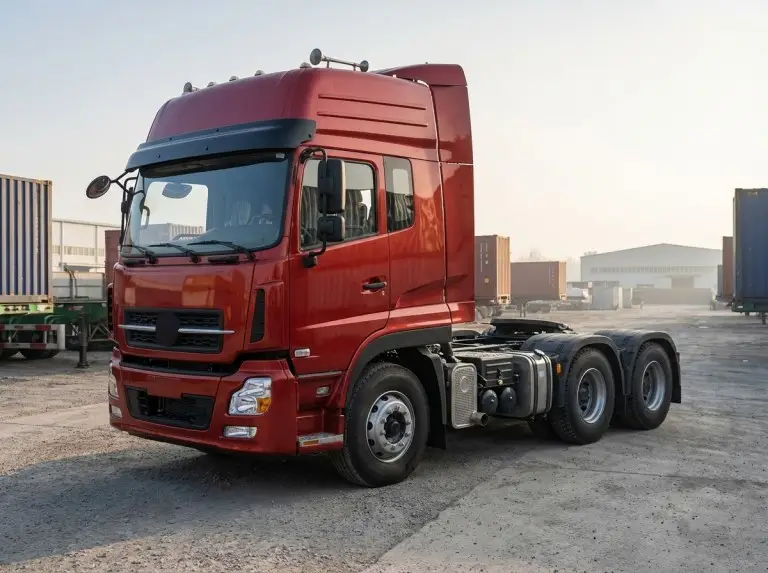

At Truckman Automobile, we know a heavy-duty truck’s lifespan depends on more than its build quality. How owners manage the early stages and tough work cycles is just as important. Shacman tractors have strong Weichai or Cummins engines, but their durability relies on following strict maintenance rules. We help our clients go beyond general advice and focus on the specific needs of the F3000 and X3000 series.Truckman Automobile can help you Buy Shacman truck head models in the right configuration—and then protect that investment with the maintenance standards outlined below.
Initial Service and Run-In Period
The first 3,000 to 5,000 kilometers are critical for the engine and differential gears. During this “run-in” period, new owners must follow strict operational limits. This allows mating surfaces to polish smoothly instead of getting scored.
We advise all clients to keep their load weight at 50–70% of the maximum capacity during these first few weeks. Driving at full throttle, exceeding 80 km/h, or towing heavy loads on steep grades before the break-in is done can create too much heat. This can lead to glazed cylinder liners and permanent oil consumption problems.
The “First Service” is necessary right after this period and is different from a standard oil change. This service involves changing the break-in oil, which often has tiny metal shavings from the factory. Crucially, this must include draining and replacing the gear oil in the transmission and axles, not just the engine, to flush out initial machining debris.
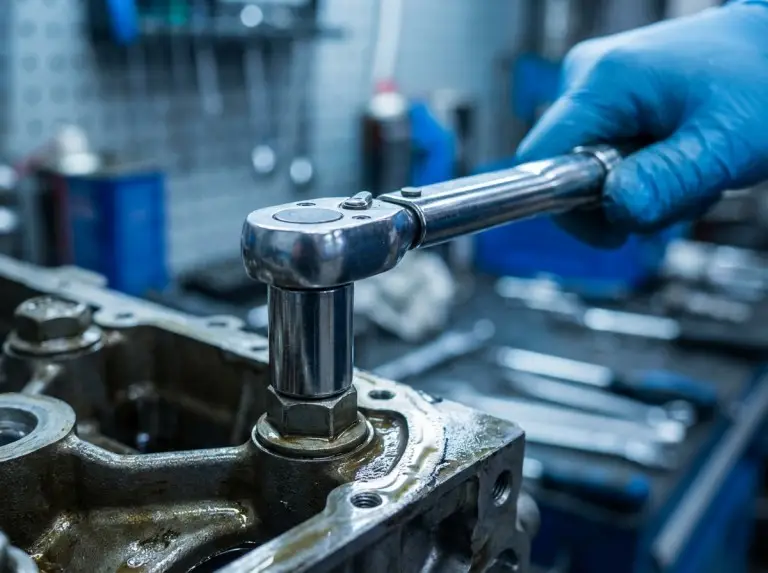
WARNING: Do NOT re-torque the cylinder head bolts. Modern Weichai and Cummins engines use Torque-to-Yield (TTY) bolts that are permanently stretched during factory assembly. Re-torquing them will cause bolt failure or head gasket leaks.Instead, the First Service must focus on checking and adjusting valve clearances (lash), which settle during the first heat cycles.
Powertrain Fluid and Turbo Care
You should adapt maintenance schedules to the truck’s specific work cycle, not a fixed calendar. We separate tractors used for long-haul highway trips from those in mining or construction.
For highway use, we suggest changing the engine oil every 15,000 to 20,000 kilometers. For off-road or heavy-load work, we shorten this to 10,000 kilometers. If using high-sulfur diesel (>500ppm), the oil change interval must be halved to prevent acid corrosion.7 We also stress using the right oil viscosity: 20W-50 for extreme tropical heat to maintain film strength and 10W-30 for cold regions to ensure good flow at start-up.
We help prevent turbocharger failure by enforcing a strict “cool-down” rule. Shacman engines run at high boost pressures. Shutting down the engine right after a heavy haul cuts off oil flow while the turbo bearing is still spinning fast. We teach drivers to idle the engine for 3–5 minutes before shutdown. This lets the oil cool the bearing and prevents “coking”.
Air Intake and Filtration
In many regions where Shacman trucks operate, dust is the main cause of early engine failure. We prioritize checking the air filtration system over almost all other daily checks. Even a small amount of silica dust can ruin an engine in hours.
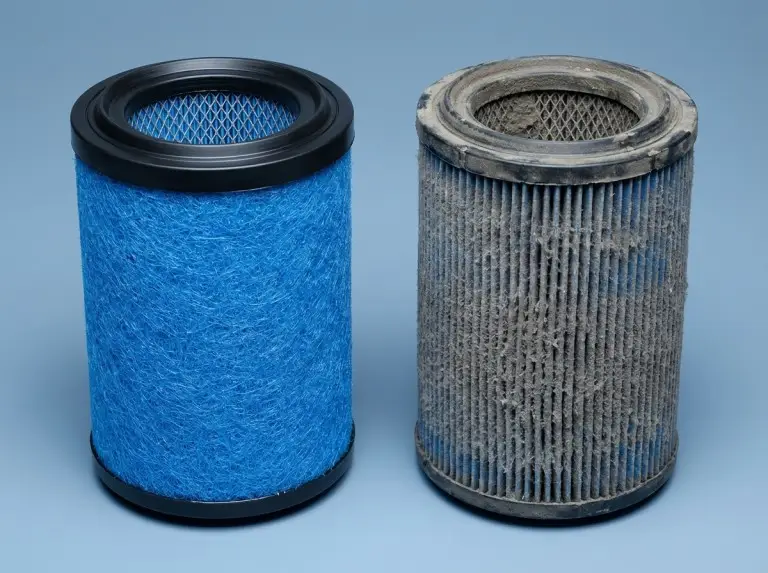
We correct the unsafe practice of cleaning paper filter elements with high-pressure air. This method can tear the filter mesh, creating invisible holes that let dust bypass the filter. We insist on replacing dirty paper elements instead of trying to clean them. If emergency cleaning is absolutely necessary, use low pressure (<5 bar) blowing from the inside out only.
For trucks with an oil-bath pre-filter, we make sure the reservoir is cleaned of sludge every week. This pre-filter is the first defense, trapping heavy sand particles. Neglecting this step overloads the main filter and shortens its life.
Chassis Lubrication and Fasteners
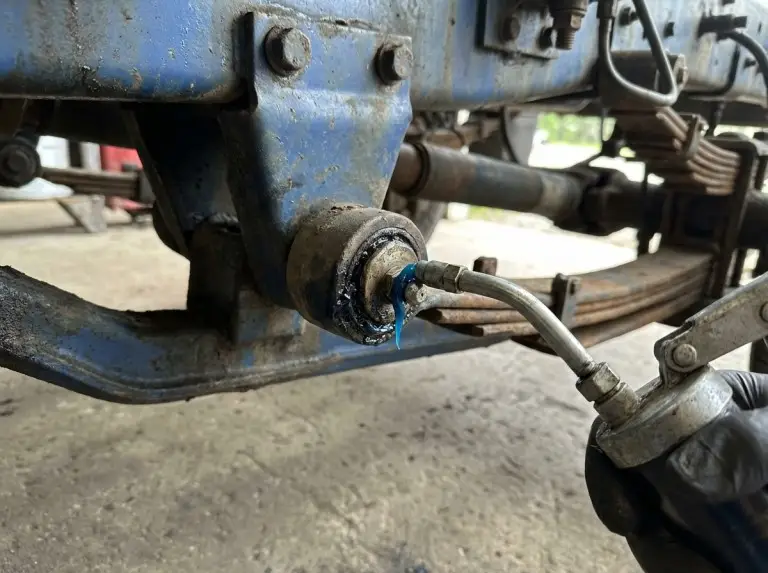
Good chassis care means completely purging old grease from high-stress points. We identify key lube points on the Shacman chassis, like kingpins, drag links, and fifth wheel jaws. These need high-pressure greasing until you see fresh grease coming out (Purge Greasing). Ensure Lithium Complex grease is used to prevent incompatibility issues.
We also check the torque on important fasteners that can loosen from vibration:
- Leaf Spring U-Bolts: Loose bolts cause the axle to shift and create “dog-tracking.” These must be re-torqued at 5,000 km and every 20,000 km thereafter.
- Wheel Nuts: You must re-torque these regularly to prevent stud failure.
- Driveshaft Flange Bolts: These are often missed, but looseness here can cause the driveline to separate.
Tires and Electrical Systems
While the engine gets the most attention, tires and batteries often cause roadside breakdowns. We use specific checks to prevent these avoidable issues.
We compare tire wear patterns to find alignment problems early. Uneven wear usually means the truck needs an axle alignment or suspension bushing replacement. We also strictly monitor tire pressure. Under-inflation by just 10% raises fuel use and heat, leading to blowouts.
We prevent electrical problems by keeping batteries clean. For the wet-cell batteries in our trucks, checking the electrolyte level is a must. Top up with distilled water only—never tap water. We also clean white corrosion powder from battery terminals with hot water and a wire brush. Poor connections can look like starter motor failures and stop the ECU from getting the right voltage. Before any welding on the chassis, strictly disconnect both battery terminals and unplug the ECU to prevent voltage spike damage.
Braking System and Pneumatic Care
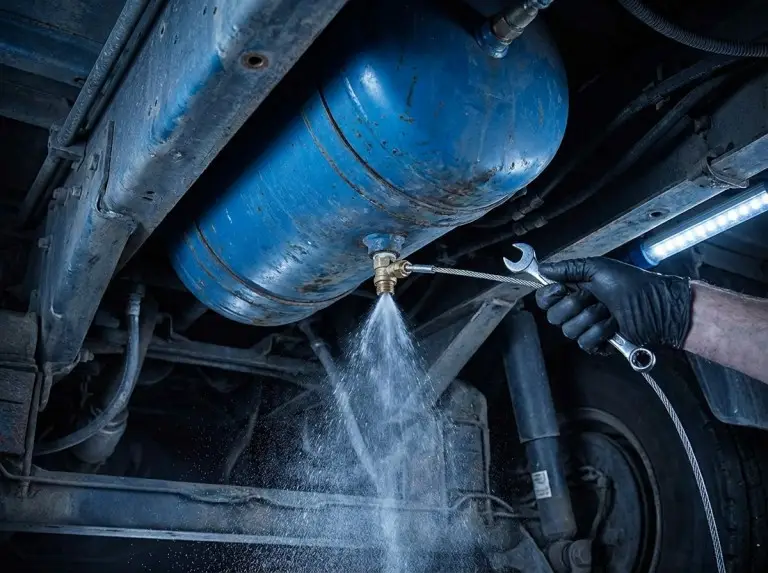
Controlling moisture in the pneumatic lines is key to preventing brake valve corrosion. We enforce a strict “end-of-shift” rule for draining air tanks to prevent brake lock-up, even if the truck has an air dryer.
Daily manual draining removes the mix of water and oil that collects in the reservoirs. If this mix gets into the valves, it makes rubber seals swell and metal parts rust. We also advise replacing the air dryer desiccant cartridge before winter to ensure the system does not freeze. For older compressors, we recommend upgrading to Oil Coalescing cartridges to trap oil mist.
Seasonal Adjustments
Extreme temperatures require you to change fluids and cooling parts ahead of time. We decide on specific maintenance actions as seasons change to prevent weather-related downtime.
| System | Winter Preparation | Summer Preparation |
| Fuel System | Switch to winter-blend diesel or use anti-gel additives. | Check the fuel cooler and clean breather vents. |
| Cooling | Check antifreeze (50/50 or 60/40) to prevent freezing. | Power-wash radiator fins; test the fan clutch. |
| Air System | Service the air dryer; test the cab heater. | Check the AC compressor and condenser. |
Conclusion
As a professional supplier of SHACMAN trucks, Truckman Automobile understands that a rigorous maintenance plan is the best “business insurance” for your vehicle. It’s not just about resale value; it directly impacts the profitability of your entire fleet.
By shifting from “reactive repair” to “proactive prevention”—especially regarding break-in maintenance, filter replacements, and turbocharger protection—you can unlock the full potential of your SHACMAN trucks. We urge every owner and fleet manager: don’t wait for a breakdown. Start protecting your bottom line with professional maintenance today!
- Act Now: Schedule the critical 5,000 km mandatory break-in maintenance for all new vehicles.
- Precision Matching: Verify and switch to the most suitable grease types and oil viscosities based on your local climate data.
- Standardize Procedures: Establish internal fleet protocols for “daily air tank draining” and “turbocharger cooling before engine shutdown.”
Let’s work together to drive business efficiency through meticulous management!
Continue Reading:Shacman Truck Maintenance
FAQ
What is the exact oil change interval?
The interval depends on fuel quality and the work cycle. Standard guidance is every 15,000–20,000 km. For severe duty like mining or if using high-sulfur fuel (>500ppm), shorten this to 10,000 km or 250 engine hours.
Can I use aftermarket filters?
We strongly advise using OEM or high-grade equivalent filters. Poor quality filters often lack the rating to protect injectors, leading to costly failures.
Why is my truck using oil in the first month?
Minor oil use is normal during the run-in period as piston rings seat. If it continues after the first service (5,000 km), you need a compression test.
How often should I grease the chassis?
We recommend greasing all chassis points every 2,500–5,000 km. If operating in wet or muddy conditions, do it weekly to push out contaminants.15
Is it necessary to warm up and cool down the engine?
Yes. Warm up for 3–5 minutes to build air pressure and oil flow. Importantly, idle for 3–5 minutes before shutdown to let the turbocharger cool. Ignoring this leads to bearing failure.