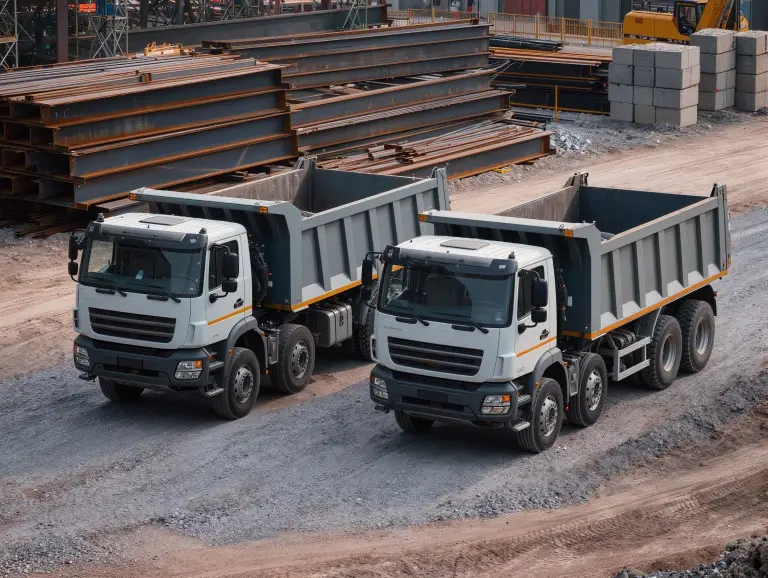

Did you know over 70% of the United States’s goods are moved by huge 18-wheeler trailers? These massive vehicles are key to the American logistics system. A standard combination of tractor and 53-foot trailer measures 70–80 feet overall.But their sizes can change a lot based on the load, design, and local rules.
This guide aims to explain the sizes of 18-wheeler trailers and tractor trailer dimensions. It helps industry experts deal with the big challenges of these huge vehicles.
Quick Answer:A standard 18-wheeler trailer measures 53 feet long, 8.5 feet (102 inches) wide, and 13.5 feet tall. When combined with the tractor, the total length of a tractor-trailer reaches 70 to 80 feet. The maximum legal gross weight on U.S. interstate highways is 80,000 lbs.

Introduction to 18 Wheeler Trailers
18-wheeler trucks, consisting of a tractor and a trailer with a total of 18 wheels, are pivotal in the logistics and supply chain industry. Understanding the dimensions and specifications of both the tractor and the trailer is essential for industry professionals.
This knowledge helps follow rules and makes logistics and transport smoother. It’s important for efficient management.
Trucking trailer sizes change a lot depending on their type and use. A standard semi-trailer typically measures between 48 to 53 feet in length. When paired with a tractor, the total length of the tractor-trailer combination is usually between 70 to 80 feet. In North America, these combinations are generally allowed to carry up to 80,000 pounds.
Rules set the max size and weight. These trailers can carry different types of cargo. You might find flatbed, reefer, or lowboy trailers, each for specific needs.
Understanding Semi Truck Dimensions
Knowing the size of semi trucks is key for following rules, staying safe on the road, and working well. The length, width, and height of a semi truck are important. They help decide what a truck can do and what it can’t.
Length Measurements of Semi Trucks
On average, a tractor-trailer combination measures about 72 feet in length. The trailer itself is typically 53 feet long, while the tractor adds approximately 20-25 feet. Federal regulations allow a maximum length for the trailer of 53 feet, and the total combination length is generally limited to 70-80 feet.The most common day cab configuration measures 70–72 feet bumper to bumper. With a sleeper cab, total length can reach 75 feet or more depending on bunk size.
Some states let trucks have longer trailers. For example, Wyoming allows trailers up to 60 feet. It’s important to know these rules. Breaking them can lead to big fines or penalties.
Width Specifications
Trailer widths typically range from 8 to 8.5 feet. This width is designed to fit within standard lane widths on highways, which are usually about 12 feet wide per lane. Adhering to these width specifications ensures safe operation and smooth traffic flow.
Height Standards
Semi trucks are about 13.5 feet tall on average. Rules set these heights for safety and to keep trucks in good shape. Trucks that are too tall without the right permits might face problems. This could lead to safety issues and legal trouble.

How Tall Is a Semi Truck?
A standard semi truck stands 13.5 feet (162 inches) tall — roughly the height of a one-story building. The maximum legal height in most U.S. states is 13.5 to 14 feet before an oversize permit is required.
Loaded reefer trailers often sit at the higher end of the range — around 13.6 feet — due to the refrigeration unit mounted on top. Flatbed trailers sit lower at around 5 feet deck height, but the overall height of a loaded flatbed still depends on the cargo stacked on the deck.
Key height facts:
- Standard dry van: 13.5 ft overall height
- Reefer trailer: 13.6 ft overall height (refrigeration unit adds height)
- Most states allow up to 13.5–14 ft without a permit
- Loads exceeding the legal height limit require route surveys and oversize permits
How Wide Is a Semi Truck?
A semi truck is 8.5 feet (102 inches) wide — the standard maximum across all 50 states for highway travel without a permit. Any load exceeding 8.5 feet is classified as an oversize load and requires pilot vehicles in most states.
Width details drivers need to know:
- Standard trailer width: 8.5 ft (102 inches) exterior
- Interior usable width: approximately 8.2 ft (98 inches)
- Loads over 8.5 ft wide require a special oversize permit
- Loads exceeding 12 ft wide typically require at least one pilot/escort vehicle
- Some states (e.g., New York on roads under 10 ft pavement width) apply an 8 ft limit
18 Wheeler Trailer Size Explained
Knowing the size of 18 wheeler trailers is very important. It helps with following rules and working efficiently. Trailer sizes affect cargo space and road safety. It’s key for truckers to know the usual sizes.
Typical Length of Trailers
Most standard semi-truck trailers are approximately 53 feet long. Pup trailers are typically 28 feet long. When a tractor pulls two pup trailers, the total length of the combination is approximately 56 feet. Some states, such as Texas, may have provisions for longer trailers under certain conditions, but it’s important to verify state-specific regulations.
This knowledge helps trucking companies pick the right trailer for their loads.
Variances in Width and Height
Standard semi-truck trailers have a width of 8.5 feet. In some states like Hawaii, wider trailers may be allowed; for example, 9 feet wide. However, most highways have lane widths of approximately 12 feet, so adhering to standard widths is crucial for safe operation. The maximum height limit is generally 14 feet to ensure clearance under bridges and other overhead structures.
Most trucks are about 13.5 feet tall. Following these rules is crucial for safe driving.
Importance of Compliance with Regulations
Adhering to trailer size regulations is not only a legal requirement but also essential for road safety. Exceeding size limits may necessitate special permits, which can be costly and time-consuming. Understanding standard sizes enables truckers to make informed decisions, ensuring compliance and efficient operations.

Types of Trailers and Their Dimensions
Knowing the different types of trailers and their sizes is key for trucking pros. Each trailer type has its own purpose and size, fitting specific cargo needs. Here’s a look at common trailer types, their sizes, and what they can carry. This info is vital for understanding trucking trailer sizes and 18 wheeler trailer dimensions.
Standard Dry Van Trailers
Standard dry van trailers carry non-perishable goods. They’re 48 to 53 feet long, 8.5 feet wide, and 13.5 feet tall. Interior height is approximately 9 feet (108 inches), and interior width is approximately 8.2 feet (98.5 inches). These trailers are a big deal in trucking because they’re versatile and follow the rules.
Flatbed Trailers
Flatbed trailers are simple and easy to load and unload. They’re 48 to 53 feet long and 102 inches wide. The deck sits approximately 5 feet above the ground. They can carry up to 48,000 pounds of cargo.
Step Deck (Drop Deck) Trailers
Step deck trailers feature two deck levels: an upper deck (typically 3–4 feet high) and a lower main deck (approximately 3.5 feet high). This design allows shippers to carry taller cargo than a standard flatbed without needing an oversize height permit in most cases. Step deck trailers are 48 to 53 feet long and 8.5 feet wide, with a maximum cargo weight of up to 48,000 pounds.
Reefer and Intermodal Trailers
Reefer trailers keep goods at the right temperature. They’re 48 to 53 feet long and 102 inches wide, with a height of 13.6 feet. Intermodal trailers are 53 feet long and 102 inches wide. They’re for shipping that needs both land and rail.
Specialty Trailers (RGN, Double Drop)
Specialty trailers like RGN and double drop are for heavy or oversized loads. RGN trailers are 48 feet long and can carry up to 40,000 pounds. The removable gooseneck allows equipment to be driven directly onto the deck, which sits as low as 2 feet off the ground. Double drop trailers are 48 feet long, with a main well of 26 to 30 feet. The center well deck sits approximately 1.5 feet off the ground, making them ideal for very tall equipment. Knowing these sizes is key for planning transport.
| Trailer Type | Length (ft) | Width (in) | Height (ft) | Interior Height | Deck Height | Max Cargo Weight (lbs) |
|---|---|---|---|---|---|---|
| Standard Dry Van | 48–53 | 102 | 13.5 | ~9 ft | ~4 ft | 45,000 |
| Flatbed | 48–53 | 102 | 13.5 | — | ~5 ft | 48,000 |
| Step Deck | 48–53 | 102 | — | — | ~3.5 ft (lower deck) | 48,000 |
| Reefer | 48–53 | 102 | 13.6 | ~8.5 ft | ~4 ft | 44,000 |
| RGN Trailer | 48 | 102 | 13.5 | — | ~2 ft | 40,000 |
| Double Drop | 48 | 102 | 13.5 | — | ~1.5 ft (well) | 40,000 |
Note: The height listed is the overall height of the trailer. For flatbed and specialty trailers, the deck height may be lower, but the overall height remains standard to comply with regulations.
Factors Affecting Trailer Size and Specifications
When we talk about commercial truck trailer dimensions, several key factors come into play. These factors affect the size and specs of the trailer. It’s important for operators to understand these to optimize their operations and follow regulations.
The main factors include state regulations, the type of load, and manufacturer specs. These all play a role in the trailer’s performance and legality.
State Regulations and Their Impact
State laws are crucial in setting trailer size limits. Each state has its own rules for length, width, and height. These rules can affect a driver’s ability to operate without fines.
For example, the average semi-trailer length in the U.S. is 72 feet. But, some states have their own limits. Operators need to know these local laws to avoid fines or disruptions.
Type of Load Carried and Its Impact
The load type greatly affects trailer size and standards. For example, flatbed trailers are usually 48 to 53 feet long. Step deck trailers have specific height needs that affect load capacity.
Knowing the max weight for different trailers is key. For instance, flatbeds can carry up to 48,000 lbs. This helps choose the right trailer size for hauling needs.
Manufacturer Specifications
Lastly, manufacturers give specific size and weight guidelines for each trailer. These guidelines vary by trailer type, like dry vans or reefers. Following these specs is vital for safety, efficiency, and regulatory compliance.
It shows how different factors affect trailer size that operators must consider.
FAQ
How long is a semi truck with trailer?
A semi truck with a standard 53-foot trailer measures approximately 70 to 72 feet from bumper to bumper when equipped with a day cab. With a sleeper cab, the total length typically reaches 75 feet or more.
What is the length of a tractor trailer?
A tractor trailer is generally 70 to 80 feet long in total. The trailer alone is 48 to 53 feet; the tractor (cab) adds 20 to 25 feet. Federal regulations cap trailer length at 53 feet on interstate highways.
How long is a semi and trailer combined?
The combined length of a semi truck and trailer is typically 70–80 feet. A day cab with a 53-foot trailer is about 70–72 feet. A sleeper cab configuration can reach 75–80 feet depending on the bunk size.
How big is a semi truck?
A standard semi truck is approximately 70–80 feet long, 8.5 feet wide, and 13.5 feet tall. The trailer alone accounts for 53 feet of that length. Maximum legal gross weight on U.S. interstate highways is 80,000 pounds.
How wide is a tractor trailer truck?
A tractor trailer truck is 8.5 feet (102 inches) wide. This is the maximum width allowed on U.S. highways without a special oversize permit. Interior trailer width is approximately 8.2 feet (98.5 inches).
How tall are semi truck trailers?
Standard semi truck trailers stand 13.5 feet (162 inches) tall. Reefer trailers are slightly taller at 13.6 feet due to the refrigeration unit on top. The maximum legal height in most states is 13.5 to 14 feet without an oversize permit.
What are typical semi trailer dimensions?
A typical semi trailer is 53 feet long, 8.5 feet (102 inches) wide, and 13.5 feet tall. Interior usable dimensions are approximately 9 feet in height and 8.2 feet in width.
What is the standard length of an 18 wheeler trailer?
An 18-wheeler trailer is usually 48 to 53 feet long. This depends on the trailer type.
How long is a typical semi truck?
A semi truck is about 70 feet long. This includes both the tractor and trailer.
What are the common dimensions for tractor trailer configurations?
Tractor trailers are often 53 feet long, 8.5 feet wide, and up to 13.5 feet high.
What factors influence the dimensions of semi truck trailers?
Trailer sizes are influenced by state rules, the load type, and manufacturer specs.
Are there variations in trailer sizes for different types of loads?
Yes, trailer sizes vary. For example, flatbed trailers differ from standard dry van trailers.
What regulations should operators be aware of regarding trailer sizes?
Operators need to know local state rules. The FMCSA sets limits on length and axle weight.
What is the importance of knowing the exact dimensions of an 18 wheeler trailer?
Knowing trailer dimensions is key for following rules. It helps in logistics and avoids fines and safety issues.